How to Recognize the Early Physical Signs of Stress (Before It Reaches a Breaking Point)

HOLISTIC PHYSIOTHERAPY & WELLNESS • APRIL 2026 • STRESS AWARENESS MONTH
Written by Kim Deschamps, MPT, BKin, PYT, BDN
— Physiotherapist | Pelvic Floor Physiotherapist | Yoga Therapist | Lifestyle Medicine Practitioner
Holistic Physiotherapy & Wellness, Saskatoon | holisticphysiowellness.ca
TL;DR: If you’re still functioning but feel tired, tense, or not quite yourself, stress may already be affecting your body. Stress doesn’t only live in your thoughts — it often shows up physically first. Muscle tension, headaches, fatigue, digestive changes, jaw clenching, and sleep disruption can all be early signs that your nervous system is under strain. Learning to recognize these signals early can help you understand what your body is communicating and support it before stress builds to a breaking point.
I've been thinking about how to start this post for a while.
I could start with research. I could talk about cortisol, muscle tone, and how the nervous system works, and we’ll get there. But that’s not where stress actually starts for most people.
The early physical signs of stress often appear in the body before people even know what’s happening. Muscle tension, headaches, fatigue, digestive changes, jaw clenching, and sleep disruption are common signals that the nervous system is under prolonged strain. Recognizing these early warning signs can help prevent stress from building until it reaches a breaking point.
I remember the first time I truly felt heard by a healthcare professional. They took the time to listen to my whole story, and that’s when I was diagnosed with ADHD. I was 35 years old and postpartum with my second child.
I got through it. But I learned that stress, anxiety, depression, and ADHD can show up in very similar ways, which makes it easy to misinterpret what's actually happening in your body.
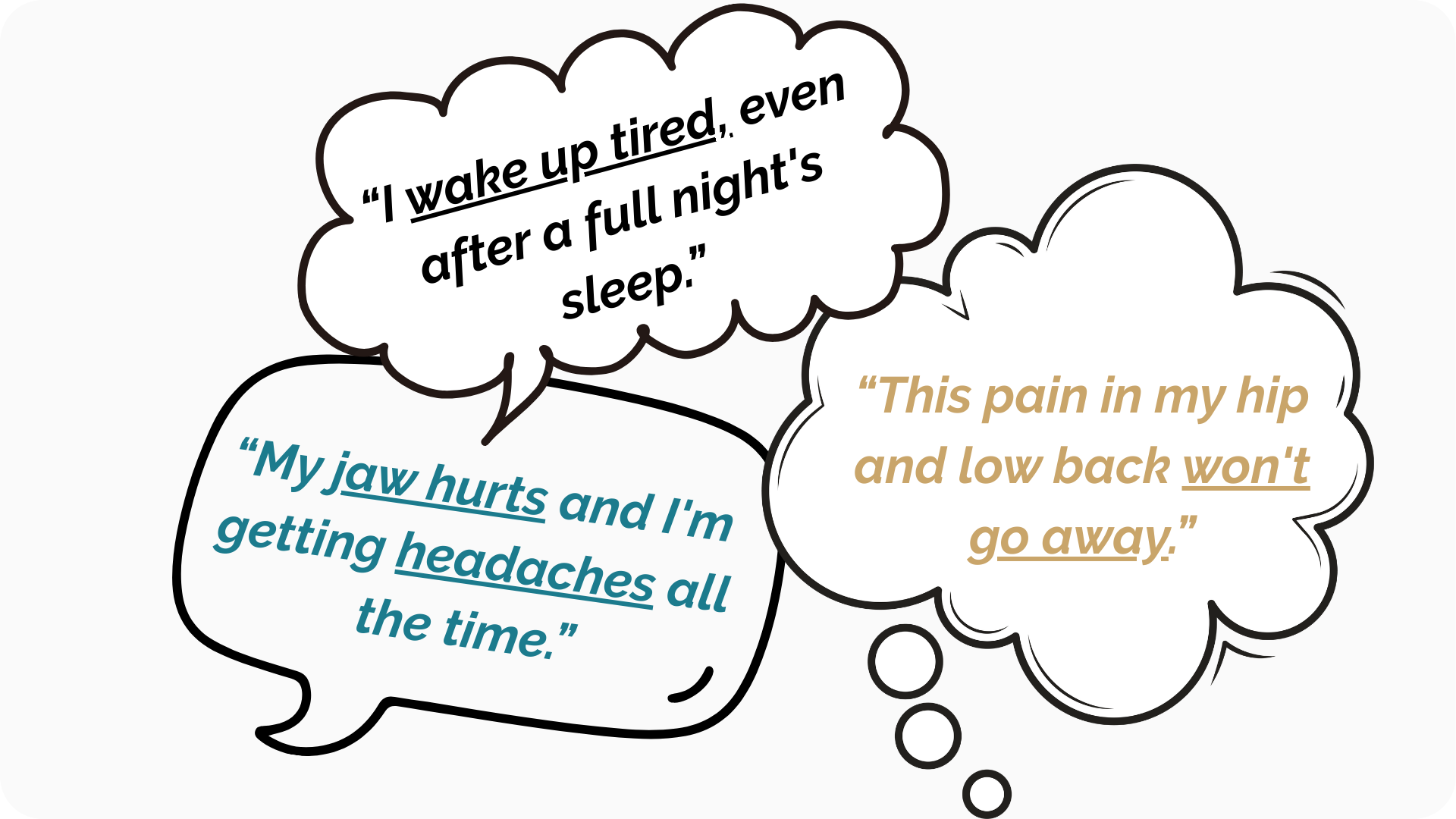
These are the words I hear from clients, patients, friends, family (and even myself) when stress gets stuck in the body.
April is Stress Awareness Month.
Many people don’t realize how much stress they’re carrying until it turns into a heart attack, a panic attack, or another breaking point. It often gets dismissed as “just part of life” or something we think we should be able to handle.
But stress is a real physiological experience, and it’s taking a measurable toll on the bodies and mental health of Canadians, particularly in the workforce and with women who are managing work, family, and caregiving at the same time.
As physiotherapists at Holistic Physiotherapy & Wellness in Saskatoon, we see physical signs of stress every day.
People come in for pain, tension, fatigue, or symptoms that don’t quite make sense on paper. And when we talk to them and really listen, it often becomes clear that stress is part of what their body has been holding and why their nervous system is working overtime.
Learning to recognize stress early is what may help reduce the impact stress can have on the body over time. That’s what I want to walk you through here, how to recognize stress in your body and what you can do about it before it reaches a breaking point.
How Many Canadians Are Experiencing High Stress?
The Numbers Are Hard to Ignore.
Before I talk about what stress feels like in the body, I want to share what it looks like across Canada. Because if you’ve been feeling like an outlier, this clearly shows you are not alone.
→ 47% of Canadian workers feel burned out — up from 33% in 2023. Working parents, millennials, HR, and legal professionals are most affected.
Source: Robert Half Canada, March 2025
→ 40% of Canadian workers live with constant stress. Women report mental health scores 6 points lower than men. Financial stress is the top driver for 49% of workers.
Source: TELUS Health Mental Health Index 2025, reported in Benefits Canada
→ 76.3% of Canadian workers say their mental health has been negatively affected by job or financial stress in the past year.
Source: Mental Health Research Canada / Canadian HR Reporter, October 2025
→ More than 4.1 million Canadians (21.2% of all employed people) report high or very high work-related stress. Heavy workload is the most common cause.
Source: Statistics Canada, reported in Global News, 2024
→ 56% of Canadian caregivers (the majority of whom are women) report feeling tired because of their responsibilities; 44% feel worried or anxious.
Source: Statistics Canada, 'More Than Half of Women in Canada Are Caregivers,' 2022
Stress is not a personal failing or a sign that someone can’t handle their life. But how do you know if what you’re experiencing is actually stress?
How Can You Tell if What You’re Feeling Is Actually Stress?

Some people don’t think they are because they can still function, go to work, and show up for their families. But when there is stress underneath all of that, their body is working overtime.
The National Institute of Mental Health (NIMH) distinguishes between stress — which is typically a response to an external cause and may resolve once the situation does — and anxiety, which is a sustained internal reaction to stress, even when the immediate threat is no longer present.
When that cycle doesn’t resolve, it can begin to affect sleep, digestion, immunity, cardiovascular function, and reproductive health.
Source: NIMH, ‘I’m So Stressed Out! Fact Sheet’ | nimh.nih.gov
High-functioning, capable people often don't recognize this shift because nothing has “broken” yet. But the body is already adapting and those adaptations come at a cost.
There's a type of stress I think about constantly because I see it every week, and I've lived it myself: high-functioning stress. It hides behind productivity. You're doing well, you're reliable, people can still count on you. But your nervous system is running on overdrive and your reserves are slowly depleting.
What Are the Early Physical Signs of Stress?
Some people think there needs to be a big dramatic event to trigger stress. But that's just not true. Your body still responds to pressure, even when you love what you're doing.
Here are a few of the early warning signs:
IN YOUR BODY
Muscle tension that doesn’t go away
Headaches or pressure in the head
Feeling restless or unable to relax
Tense jaw or clenching teeth
Trouble sleeping or sleep that doesn’t refresh you
Digestive shifts like nausea, bloating, or changes in appetite
IN YOUR THOUGHTS
Trouble focusing or noticing forgetfulness
Feeling jumpy or easily startled
Racing thoughts or difficulty concentrating
Feeling overwhelmed by small decisions
Drifting into negative thinking more than usual
IN YOUR BEHAVIOUR
Putting off small tasks you’d usually handle
Difficulty making decisions you normally would
Choosing “easy” comfort food more than usual
Withdrawing from activities or people you enjoy
Avoiding things that feel like more effort than they should
IN YOUR MOOD & ENERGY
More irritable or sensitive than usual
Fun feels like a hassle instead of enjoyment
Tired even after adequate sleep
Feeling like you need to “get through” your day rather than live it
If you recognize yourself here, it could be an early warning of stress. It’s a good idea to get support before it gets worse and reaches a breaking point.
What Actually Happens in Your Body When You’re Stressed Out?
When your nervous system perceives ongoing demand like deadlines, financial pressure, caregiving responsibilities, a difficult relationship, or even just feeling like you never have enough time, your body activates its stress response.
Here’s what that looks like physiologically: a perceived threat activates the amygdala, which sends a distress signal to the hypothalamus. This triggers the fight-or-flight response. Adrenaline (epinephrine) is released, your heart rate increases, you start breathing faster, muscles contract and blood sugar rises to supply energy. Your body prepares to protect you.
Source: Harvard Health Publishing, ‘Understanding the Stress Response,’ reviewed April 2024 | health.harvard.edu
This is a brilliantly designed survival system. The problem is that it was built for short bursts. Not sustained, daily activation.
When stress becomes chronic, it can contribute to serious risks like:
High blood pressure and increased cardiovascular risk
Buildup of artery-clogging deposits
Brain changes associated with anxiety and depression
Disrupted sleep and difficulty feeling rested
Weight changes driven by cortisol’s effect on appetite and fat storage
Source: Harvard Health Publishing, 2024 | health.harvard.edu
For many high-functioning people, this becomes the new normal. The body doesn’t return to rest. It just stays braced. And the longer it stays there, the harder it becomes to notice.
How Does Stress Get Stored in the Body?

Stress isn’t just in your head. It gets stored in the fascia, muscles, and connective tissue. Research in somatic psychology and body-based therapy shows that unprocessed emotional stress can create persistent areas of physical tension. Many people describe carrying it in the jaw, base of the skull, between the shoulder blades, the low back, the hips, and the chest.
Source: Healthline, ‘How to Release Emotional Baggage and the Tension That Goes With It’ | healthline.com
When the nervous system stays in protection mode, stretching alone is often not enough to release this tension. The muscle isn’t just shortened. It’s being actively held in contraction by the nervous system itself. This is why so many people stretch consistently and still feel tight. They’re addressing length, but not the nervous system’s grip.
In some cases, when stress is overwhelming and sustained, the nervous system can shift into what clinicians sometimes describe as a functional freeze state — a shutdown response where the body becomes still, numb, or disconnected as a way of coping.
FUNCTIONAL FREEZE CAN LOOK LIKE
Feeling exhausted but unable to rest
Difficulty making decisions or completing tasks
Feeling emotionally numb or disconnected
Feeling stuck — even when life appears to be going reasonably well
Source: Banner Health, ‘Functional Freeze Mode: What It Is and How to Break Free’ | bannerhealth.com
These are not signs that something is wrong with you. They are signs that your nervous system has been working very hard, and for a long time, to protect you.
My Personal Practice
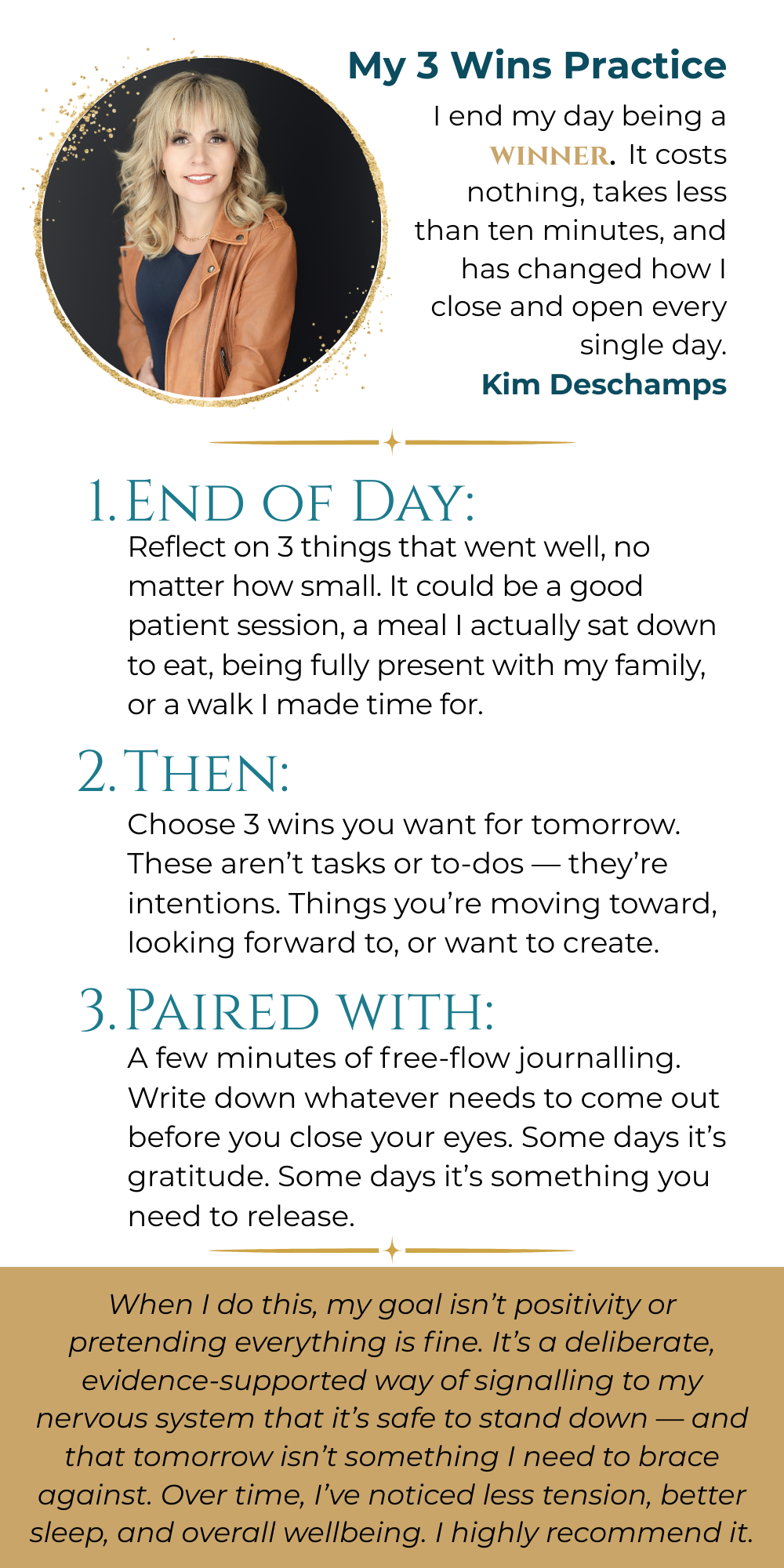
Journaling is a meaningful and evidence-supported tool. I’m sharing my personal “3 Wins Practice” here because it’s something I use myself.
But it shouldn’t be used as a substitute for addressing the physical symptoms of stress when they begin to show up in your body.
When Should You Seek Support for Stress Symptoms?
If stress is showing up as persistent pain, pelvic floor symptoms (urgency, leaking, pressure, discomfort, painful intimacy), chronic muscle tension that stretching can’t reach, fatigue that doesn’t improve with adequate sleep, recurring injuries, or a plateau in recovery — then the body needs more than a mindset shift. It needs professional, whole-person support.
Lifestyle Medicine and PhysioYoga are two evidence-informed approaches that look at the root contributors to how you’re feeling: your nervous system patterns, sleep quality, movement habits, stress load, and daily rhythms. You don’t need to wait until something breaks to take your body seriously. What you’re feeling right now is worth paying attention to.
Where to Start
Pay attention to the patterns you’ve been normalizing.
Start tonight with the 3 Wins. Write down three things that went well today no matter how small. Then choose three wins you want for tomorrow.
Notice what your body feels like when you stop pushing for just a few minutes.
Ready for Whole-Person Support?
Explore Lifestyle Medicine and PhysioYoga, Pelvic Floor Physiotherapy, Massage Therapy, Clinical Counselling or another collaborative service at Holistic Physiotherapy and Wellness.
Book a free 15-minute discovery call → holisticphysiowellness.com
From all of us at,
Holistic Physiotherapy & Wellness
Frequently Asked Questions
What are the physical signs of stress in the body?
Common physical signs of stress include persistent muscle tension, headaches or jaw clenching, disrupted sleep, digestive changes like nausea or bloating, and fatigue that doesn’t improve with rest. The jaw, shoulders, low back, and hips are common places stress gets physically stored.
Where does the body store stress?
Stress is commonly stored in the fascia, muscles, and connective tissue. People often feel it in the jaw, base of the skull, between the shoulder blades, low back, hips, and chest. Stretching alone often can’t release it because the nervous system is actively holding the tension.
What is functional freeze?
Functional freeze is a nervous system shutdown response to overwhelming or sustained stress. It can feel like exhaustion without the ability to rest, emotional numbness, difficulty making decisions, or feeling stuck — even when life appears to be going reasonably well.
What is the difference between stress and anxiety?
Stress is the body’s response to a challenge or demand. Often we think of stress as something external, such as work pressure, deadlines, relationship conflict, or physical strain. When the situation resolves, the body’s stress response usually returns to normal.
Stress can also come from inside the body. Internal stressors such as blood sugar spikes, pain, inflammation, illness, or digestive discomfort can signal the nervous system that something is wrong. The body reacts in the same way it would to external pressure by activating stress hormones like cortisol.
Anxiety is more of a persistent internal response. It can continue even when there is no immediate external threat because the nervous system remains in a heightened state of alert.
When stress or anxiety continues for long periods of time, it can affect sleep, digestion, immune function, and cardiovascular health.
How can I tell if I’m burned out or just stressed?
Burnout often involves emotional numbness, feeling detached from work or relationships, and persistent exhaustion even after rest. Stress typically involves more active symptoms like tension, irritability, and racing thoughts. Both benefit from early support.
If you notice ongoing low mood, emotional numbness, or a sense of being stuck, it may be helpful to speak with a clinical counsellor. Working with a counsellor can help identify the sources of stress and support your nervous system in moving out of that freeze response.
👉 Clinical Counselling for Stress and Burnout
What is a simple daily practice to manage stress?
The 3 Wins Practice: at the end of each day, write down 3 things that went well, then set 3 intentions for tomorrow. Pair this with a few minutes of free-flow journalling to release what’s on your mind before sleep.
Please note: This post is for educational purposes and reflects Kim’s clinical experience and perspective as a physiotherapist and lifestyle medicine practitioner. It is not a substitute for professional medical advice. If you are experiencing significant mental health challenges, please reach out to a qualified healthcare provider. Crisis Services Canada: 1-833-456-4566 (toll-free, 24/7).