Manual Osteopathy in Saskatoon
For pain that keeps coming back.
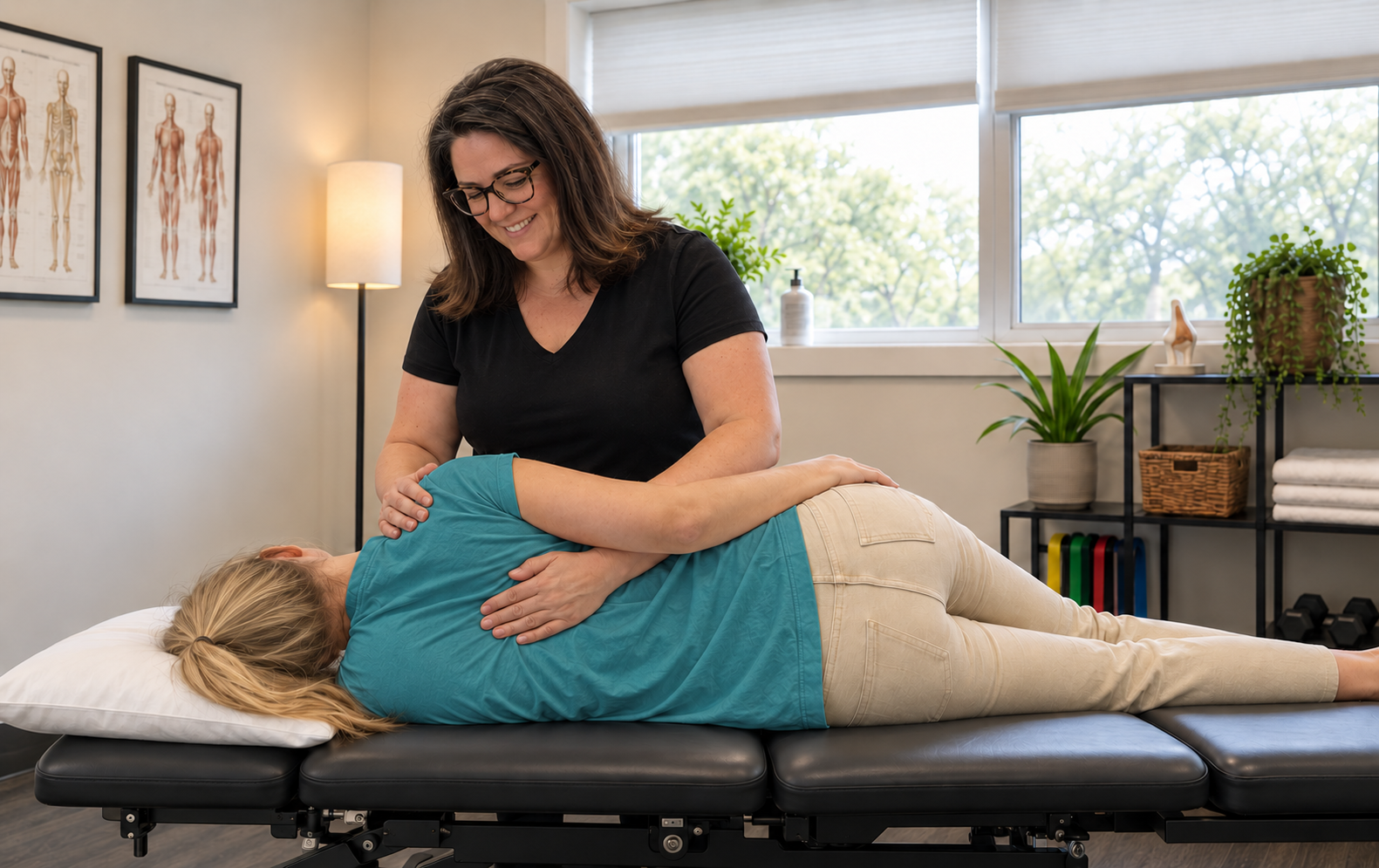
Manual osteopathic therapy can help you move better and understand what may be causing your pain or injury. At Holistic Physiotherapy & Wellness, Kirsten Simmons takes time to hear what's been happening, check how you move and talk with you about whether osteopathy is a good fit.
You may want to ask about osteopathy if you're dealing with:
Back or neck pain that affects work, sleep or daily activities.
Stiffness that makes bending, reaching or turning difficult.
Muscle tension or discomfort around your shoulders and hips.
Pain that keeps returning and leaves you unsure what to try next.
-
Manual osteopathic therapy is a form of osteopathic care that uses hands-on assessment and treatment to work with your muscles, joints and the tissues around them.
Kirsten looks at how your joints, muscles and nervous system work together, not just the spot that hurts. For example, if your back hurts, she may also check your hips and the way you walk. The goal is to understand what may be contributing to your pain and choose care that fits your needs.
Treatment may include gentle joint movement, stretching, hands-on work for tight muscles and tips on how to move between visits.
Many people look into osteopathy when pain lingers, keeps returning or rest alone hasn't helped.
-
Both use hands-on care but approach treatment differently.
Massage therapy often focuses on muscles and other soft tissues, and clients typically undress down to their comfort level (often to underwear) under a drape for direct skin-to-muscle work, applying pressure to knots until they physically relax.
Manual osteopathic therapy considers how your joints and surrounding tissues move together, which involves posture assessments and gently moving, stretching, and manipulating your framework (joints, bones, and deep tissues) while you remain fully clothed to take the structural stress off your muscles so they can relax on their own.
There is overlap between the two treatments. Kirsten offers both services and can explain which appointment suits your goals.
-
Both look at your body as a whole to uncover the root cause of pain, focus on your body’s alignment and movement, and are excellent for rehabilitation or preventative care, but they use different approaches to get you moving comfortably.
Physiotherapy is primarily an exercise-led approach that uses movement retraining, targeted strengthening, and stretching programs to actively build long-term physical resilience.
Manual osteopathic therapy is a purely hands-on approach using gentle mobilization and manual adjustments to restore physical alignment without active exercise prescriptions.
If you need a rehabilitation or preventative care plan, our team can help you choose the right starting point.
-
Manual osteopathy is highly effective for both sudden injuries and a wide range of aches, pains, and long-term discomfort.
It commonly helps with:
Back & Neck Pain: Lower back pain, neck stiffness, and sciatica.
Joint Discomfort: Pain or stiffness in your hips, knees, ankles, or shoulders.
Headaches & Jaw Tension: Tension headaches, migraines, and TMJ/jaw pain.
Posture & Desk Strain: Aches caused by sitting at a computer or driving.
Repetitive Strain: Conditions like tennis elbow or carpal tunnel syndrome.
Stress & Digestion: Calming a wound-up nervous system and easing digestive bloating or tension.
-
Manual osteopathy is generally much gentler than expected, usually feeling like a deep stretch or a firm massage. While joint manipulation can sometimes cause a painless "pop" or "click," the focus is on rhythmic, comfortable movement. You may experience mild soreness or stiffness for 24 to 48 hours after treatment as your body adjusts. Most importantly, you are always in control of your session. Tell Kirsten what feels comfortable and what doesn’t. She can adjust the pressure or approach, and you can ask to pause or stop at any time.
-
An initial appointment usually takes 75 minutes to complete a comprehensive health history review, a full-body structural assessment, and your first hands-on treatment session. Follow-up appointments are 45, 60, or 90 minutes depending on your specific treatment goals and progress. During your subsequent follow-up sessions, Kirsten will recommend the best time length based on the complexity of the issues you are working through together.
-
The number of sessions depends on your symptoms, health history, and response to care. If it's a recent injury, we'd usually schedule 2 or 3 appointments close together in the first couple of weeks to get the pain under control quickly. If it's a chronic condition, or if you are looking for maintenance and prevention, we'll design a personalized plan where appointments are progressively spaced further out as your body begins to heal and hold its alignment on its own. After your initial assessment, Kirsten will discuss this plan with you. Follow-up appointments are a great chance to review your changes and decide together what comes next.
-
Many people notice a change in pain or movement within their first two or three sessions, and some feel easier movement right away. Each visit builds on the last, because Kirsten adjusts your treatment to how your body responded. You might feel mildly sore for a day or two afterward, a lot like after a good workout.
-
While manual osteopathy is safe and gentle for most people, you should seek medical advice or avoid treatment if you have certain medical conditions affecting your bones, joints, or circulation. Extra care is needed, and techniques must be modified or avoided if you have:
Active Bone Injuries: Recent fractures, dislocations, or bone infections.
Severe Bone Fragility: Advanced osteoporosis or conditions that severely weaken your bones.
Inflammatory Joints: Active flare-ups of inflammatory arthritis (like rheumatoid or psoriatic arthritis).
Circulatory or Blood Disorders: Active deep vein thrombosis (blood clots), bleeding disorders, or if you take prescription blood-thinning medications.
Unexplained Symptoms: Sudden or severe neurological signs, such as progressive limb weakness, numbness, or severe headaches.
Always provide a full and accurate medical history before your session so treatment can be tailored to prioritize your safety.
-
You’ll be fully clothed during your treatment, so please wear loose, flexible clothing that allows you to move easily. Stretchy athletic wear like yoga pants, leggings, sweatpants, and a comfortable t-shirt or tank top are ideal options. It is best to avoid stiff fabrics like jeans, or bulky items with heavy zippers, buttons, or belts, as these can restrict your range of motion and make it harder to assess your alignment.
-
Yes. Many people book manual osteopathic therapy alongside other care at our clinic. Each treatment has a different focus:
Manual osteopathic therapy looks at how different areas of your body move together.
Massage therapy eases tension in your muscles and soft tissues.
Physiotherapy builds strength and movement through exercise and rehabilitation.
Dry needling targets tight or sensitive spots in a specific muscle.
Shockwave therapy focuses on a specific tendon or area of long-lasting pain.
With your consent, Kirsten can coordinate with your other practitioners so your treatments support each other. If you're also seeing a doctor or specialist, let her know so she can plan around your medical care. Check your benefits too, since each service may have separate coverage limits.
-
No referral is needed. You can book directly through our website or by contacting our administrative team.
-
Your first visit is a 75-minute assessment and treatment for $175. Follow-up visits are:
45 minutes: $115
60 minutes: $140
90 minutes: $190
Many extended health plans cover manual osteopathic therapy under osteopathy benefits, separate from massage. Direct billing may not be available with all insurers, so check your coverage before your visit. Kirsten will recommend a follow-up length based on your needs.
Frequently Asked Questions:
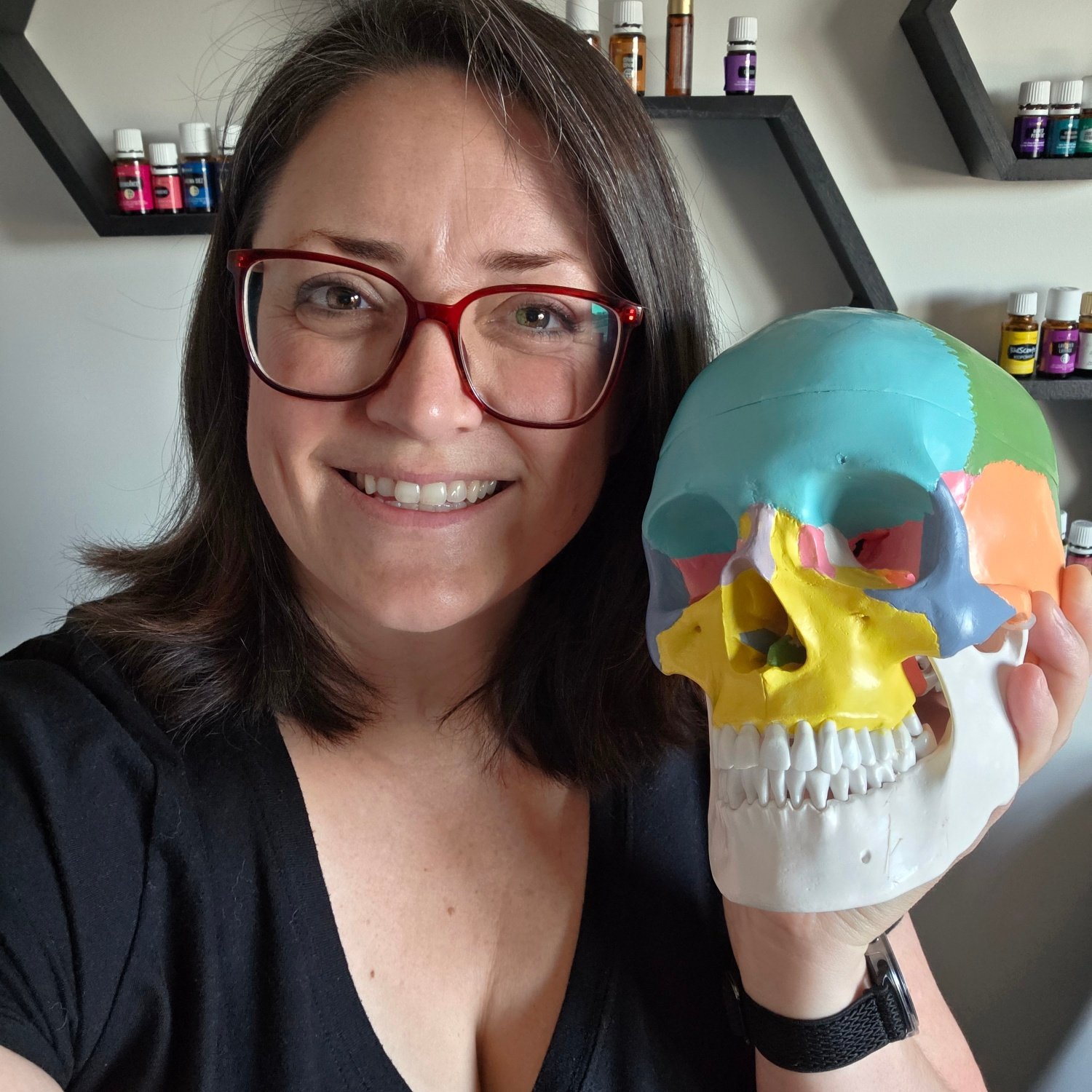
Meet Kirsten Simmons
Registered Massage Therapist and Manual Osteopathic Therapist
Before Kirsten became a massage and osteopathic therapist, she worked in nursing. That experience shaped how she works today: she wanted to help people with hands-on care that looks for what's contributing to their pain, not just the symptoms.
Kirsten takes a whole-person approach, and her colleagues describe her as compassionate, curious and dependable. She offers therapeutic massage, CranioSacral therapy and manual osteopathic therapy, and she's registered with WCB and SGI.
Her favourite wellness tip? "Sometimes the gentlest techniques create the biggest changes."
Outside the clinic, you'll find her reading, spending time with her kids or heading somewhere near water and mountains. She's also been cage diving with great white sharks in South Africa.
Why Choose Manual Osteopathy with Holistic Physiotherapy and Wellness?
Care that starts with understanding you.
Time to be heard. Kirsten takes time to understand what's been happening, what you've tried and what you want to get back to.

A nursing background. Kirsten understands how your health history, medical care and daily life can connect to your pain.
Care from more than one perspective. When it helps, Kirsten works with our physiotherapists and other practitioners, with your consent, so your care fits together.
Your whole body, not just the sore spot. She looks at how your joints, muscles and nervous system work together to find what may be contributing to your pain.
Massage and osteopathy with one practitioner. As a Registered Massage Therapist and Manual Osteopathic Therapist, Kirsten can help you choose the approach that suits your goals.
What to Expect During Your First Osteopathic Appointment
Before your visit
We'll email you a short online questionnaire to fill out before you come in. If you can't complete it ahead of time, please arrive 15 to 20 minutes early. You'll stay fully clothed during treatment, so wear loose, comfortable clothes you can move in.
What to expect at your appointment
1. Assessment and conversation
Kirsten will ask about your symptoms, health history and goals, then check how you move. She'll explain what she finds and whether manual osteopathic therapy is a good fit for you.
2. Treatment
If it's a good fit, Kirsten will use gentle, hands-on techniques such as joint movement, stretching and work on tight muscles. She'll check in on your comfort throughout, and you can ask her to adjust the pressure or pause at any time.
3. Guidance between visits
You'll leave with simple ways to keep your progress going at home, such as movements to try or changes to how you sit, lift or sleep. If another service at our clinic could help, Kirsten will talk with you about it.