
Radial Shockwave Therapy: How It Works, What It Treats, and What You Can Expect
December 2025
TL;DR: Radial Shockwave Therapy is a non-invasive treatment for chronic tendon and soft-tissue pain that hasn’t fully improved with rest, stretching, or other care. It uses acoustic sound waves to increase blood flow, stimulate tissue repair, and break down scar tissue, helping the body heal rather than just masking symptoms.
Research shows strong results for conditions like plantar fasciitis, Achilles and patellar tendinopathy, tennis elbow, and rotator cuff-related shoulder pain. Most people benefit from 3–6 sessions, with noticeable improvements usually developing over 5–11 weeks. Treatments may feel strange but are tolerable, with mild soreness afterward being common for 12–48 hours. After sessions, we recommend gentle movement and avoiding heavy impact while tissues adapt.
At Holistic Physiotherapy & Wellness, Shockwave is part of a holistic treatment approach to help active people move with more comfort and confidence. If you’re unsure whether it’s right for you, a free discovery call is a simple place to start.
How Effective is Radial Shockwave Therapy?
How It Works, What It Treats, and What You Can Expect
If you’re someone who likes to stay active walking regularly, going to the gym, playing rec sports, working a physical job, or simply keeping up with the demands of daily life, you know how frustrating it is when pain or stiffness gets in the way.
Radial Shockwave Therapy (RSWT) is a non-invasive treatment used to support tendon and soft-tissue injuries that have been around for a while or keep coming back. At Holistic Physiotherapy & Wellness, we use Shockwave Therapy to offer a targeted, research-supported approach for people who want to move comfortably and stay active and manage pain.
This guide explains how radial shockwave therapy works, what it’s commonly used for, how effective it is, potential side effects, and what to expect before and after your sessions.
What Is Radial Shockwave Therapy (RSWT)?
Radial Shockwave Therapy uses acoustic (sound) waves to stimulate the body’s natural healing processes. These waves travel through the surface of the skin into deeper tissues such as tendons, fascia, and muscle.
RSWT is:
Non-surgical
Drug-free
Needle-free
Quick to perform
Designed for long-standing or recurring issues
It can be especially helpful for people who stay active but feel limited by ongoing stiffness, tendon irritation, or soft-tissue pain.
How Radial Shockwave Therapy Works
Acoustic pulses are applied to the injured area to:
Increase blood flow
Improved circulation helps bring oxygen and nutrients to tissues that need support.Stimulate tissue regeneration
It encourages the body’s natural repair processes in tendons and soft tissue.Break down scar tissue and adhesions
This may help restore mobility if the tissue feels thick, stiff, or restricted.Reduce pain sensitivity
The waves can calm irritated nerve endings, helping the area feel more comfortable as deeper healing occurs.
Shockwave therapy doesn’t mask symptoms — it aims to support long-term tissue health by stimulating healing.
Common Conditions Radial Shockwave Can Help With
Radial shockwave is often used for chronic or recurring issues, such as:
Plantar fasciitis
Achilles tendinopathy
Patellar tendinopathy
Tennis elbow or golfer’s elbow
Rotator cuff–related shoulder pain
Shin splints
Heel spurs
Chronic soft-tissue tightness
Myofascial trigger points
Bursitis (in select cases)
Scar tissue and adhesions
These conditions often develop gradually from repetitive loading, daily habits, or past injuries.
How Effective Is Radial Shockwave Therapy? Research at a Glance:
Shockwave therapy is supported by research for many chronic tendon and soft-tissue conditions. Improvement rates vary, but studies often report:
Plantar fasciitis: ~70–90%
Tennis elbow: ~70–80%
Rotator cuff tendinopathy: ~70–85%
Achilles tendinopathy: ~70–85%
Patellar tendinopathy: ~70–85%
Calcific tendonitis: up to ~90% improvement (from focused shockwave data; included as general context)
Results depend on:
how long the condition has been present
tissue health
daily activity levels
movement patterns
training or work demands
lifestyle factors like sleep and stress
how well shockwave is paired with appropriate exercise
When will I notice results?
Many people feel early relief from decreased nerve sensitivity, but deeper improvements take time. Most noticeable changes appear 5–11 weeks into the healing process.
What Does Shockwave Therapy Feel Like and is it Painful?
People often describe the sensation as “odd but tolerable”. You’ll feel:
tapping
pulsing
deep pressure
Some areas may feel more sensitive than others. The intensity is always adjustable, and you can guide your practitioner based on comfort.
What Happens During a Session?
1. Check-in and assessment
Your practitioner will ask how you’re feeling, look at how the area moves, and discuss your activity level.
2. Gel application
A gel is applied to help the acoustic waves travel into the tissue.
3. Customized settings
Intensity, frequency, and impulses are tailored to your comfort and condition.
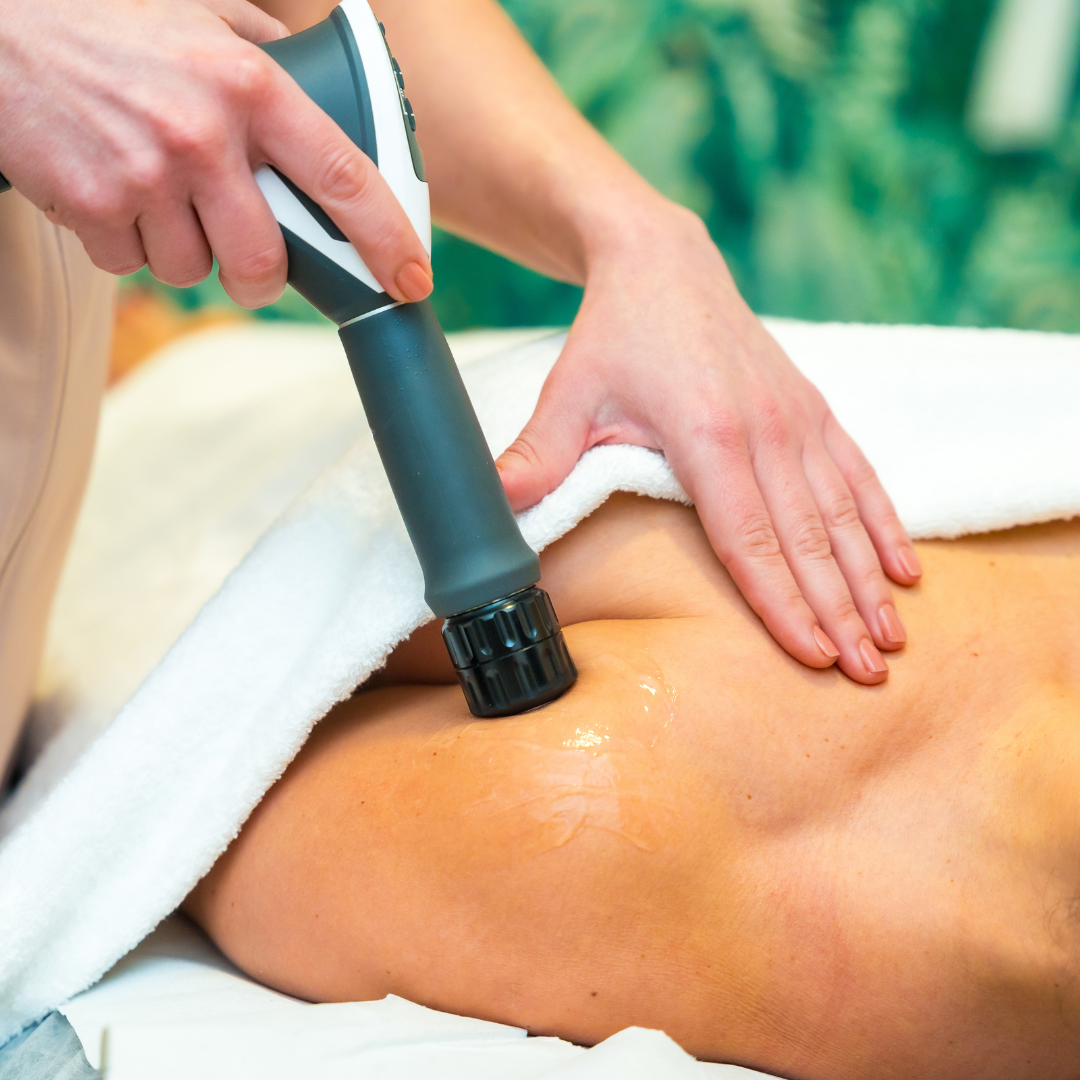
4. Shockwave treatment
The device is moved across the affected area.
5. Recovery guidance
You’ll receive simple recommendations for movement, activity, and aftercare.
A session lasts 45 or 60 minutes, depending on your appointment type.
How Will I Feel After Treatment?
It’s normal to experience:
mild soreness
slight swelling
heaviness
temporary sensitivity
a feeling of looseness or lightness in the treated area
These effects usually last 12–48 hours, sometimes up to 72 hours for chronic issues.
Aftercare: How to Support Your Healing
For the first 48 hours, avoid:
high-impact exercise
running or jumping
heavy lifting
deep tissue massage on the area
icing (may interfere with healing)
Helpful options include:
light walking
gentle mobility
hydration
heat (unless the area feels irritated)
paying attention to how your body responds
This gives your tissues time to adapt to the treatment.
How Many Sessions Do I Need?
Most people benefit from 3–6 weekly sessions.
The number of sessions depends on:
the type of injury
how long it has been present
your activity level
tissue health
the amount of scar tissue
your recovery habits
Shockwave works best when combined with appropriate movement and gradual loading.
Who Should Avoid Shockwave Therapy?
Shockwave therapy is not recommended for:
pregnancy
individuals with blood-clotting disorders
people on certain blood thinners
those with a pacemaker
local infection or tumor
anyone with an allergy to ultrasound gel
Your clinician will review your health history before treatment.
How much does Radial Shockwave Therapy cost?
2025 Prices for Shockwave Therapy in Saskatoon using the Storz MP-200 at Holistic Physiotherapy and Wellness:
$95 — 45-minute session
$130 — 60-minute session
Each appointment includes assessment, tailored treatment settings, shockwave application, and movement-based recovery guidance. Insurance coverage varies by plan.
Not sure if it’s right for you?
Book a free 15-minute Discovery Call to discuss your goals and next steps.
From all of us at,
Holistic Physiotherapy & Wellness
Cleveland Clinic Canada. (2025). Shockwave therapy. https://www.clevelandclinic.ca/services/shockwave-therapy
CBI Health. (2025). What is shockwave therapy? https://www.cbi.ca/services/shockwave-therapy
Arbutus Physiotherapy & Health Centre. (2025). Shockwave therapy (ESWT). https://arbutusphysiotherapy.ca/services/shockwave-therapy
Panther Sports Medicine. (2025). Shockwave therapy clinics. https://www.panthersportsmedicine.com
Center for Healthy Living Calgary. (2025). Shockwave therapy – Calgary. https://www.centerforhealthyliving.ca/shockwave-therapy
Radiant Physiotherapy Clinic. (2025). Shockwave therapy. https://radiantphysiotherapy.ca/services/shockwave
The Clinic YYC. (2025). Shockwave therapy. https://theclinicyyc.ca/shockwave-therapy
Shockwave Canada. (2025). Shockwave therapy for musculoskeletal care. https://shockwavecanada.com/shockwave-therapy-musculoskeletal-care
Woodside Clinic. (2025). Shockwave therapy: The benefits and risks. https://www.woodsideclinic.co.uk/shockwave-therapy-the-benefits-and-risks
Peng, J. (2024). Extracorporeal shockwave therapy: What you need to know [Video]. YouTube. https://www.youtube.com
Wikipedia. (2025). Extracorporeal shockwave therapy. https://en.wikipedia.org/wiki/Extracorporeal_shockwave_therapy
HealingWave. (2025). Shockwave aftercare. https://www.healingwave.ca/aftercare
Holistic Physiotherapy & Wellness. (2025). Shockwave therapy Saskatoon. https://www.holisticphysiowellness.ca/shockwave-therapy-saskatoon