
Surprising symptoms men don’t connect to pelvic health, and where the pain really comes from.
By Kim Deschamps, Registered Physiotherapist · Holistic Physiotherapy & Wellness · 8 min read
TL;DR
A testicle can look and feel normal while muscles or nerves in the pelvis, groin, hips, or lower back send pain into it.
If infection tests are negative and antibiotics haven’t helped, chronic pelvic pain or a tight pelvic floor may be part of it. Pelvic floor physiotherapy can help.
Kegels aren’t right for every pelvic floor. They can make pain worse when the muscles are already too tight.
You’ll get a few things to try at home this week once serious causes are cleared, from toilet posture to breathing on effort.
Any new lumps, unusual firmness, swelling, or change in a testicle’s size or shape should be checked by your healthcare provider.
Sudden, severe testicular pain can be an emergency. Go to the nearest emergency department right away.
Even with great initiatives like Movember that get men talking about prostate cancer, testicular cancer, and mental health, a lot of men are searching up their symptoms at midnight and telling no one about.
If there is soreness, aches, or pain down there, it’s only natural to wonder if something’s seriously wrong. So you either panic or you push it out of your mind. I understand both reactions but I’d rather give you a third option: understand what’s actually going on, and what to do about it.
Things that cause pain or discomfort below the belt have names, causes, and paths forward. It can feel awkward to raise, but knowing when this pain is urgent, and where the ongoing kind actually comes from, can help you get the right care sooner.

Canadian comedian Tom Green was diagnosed with testicular cancer at 28, and he turned it into a public push to get men checking themselves and talking about it.
First, the kind of testicular pain that needs a doctor today
Please get seen right away if you have any of these:
Sudden, severe testicular pain
Swelling, redness, or warmth
Fever or chills
Pain after an injury to the groin
If you or someone you know experiences sudden, severe testicular pain, it could signal testicular torsion. This happens when the testicle twists and cuts off its blood supply. It’s a time-sensitive emergency. Go to the nearest emergency department immediately to have it ruled out or treated.
And separate from pain, get checked if you notice:
A new lump
Unusual firmness
A change in a testicle’s size or shape
A new feeling of heaviness in the scrotum
About 1,300 Canadian men will be diagnosed with testicular cancer in 2026, and it’s the most common cancer in men aged 15 to 35.
It’s also one of the more treatable cancers, especially when it’s caught early. You don’t need a complicated routine. Know what’s normal for you, and if you notice a lump, swelling, a change in size, or an ache that won’t quit, book an appointment with your healthcare provider.
Once your doctor has ruled the serious causes out, we can talk about the far more common reason men hurt down there.
Why do I have aches, soreness or pain in my right or left testicle?
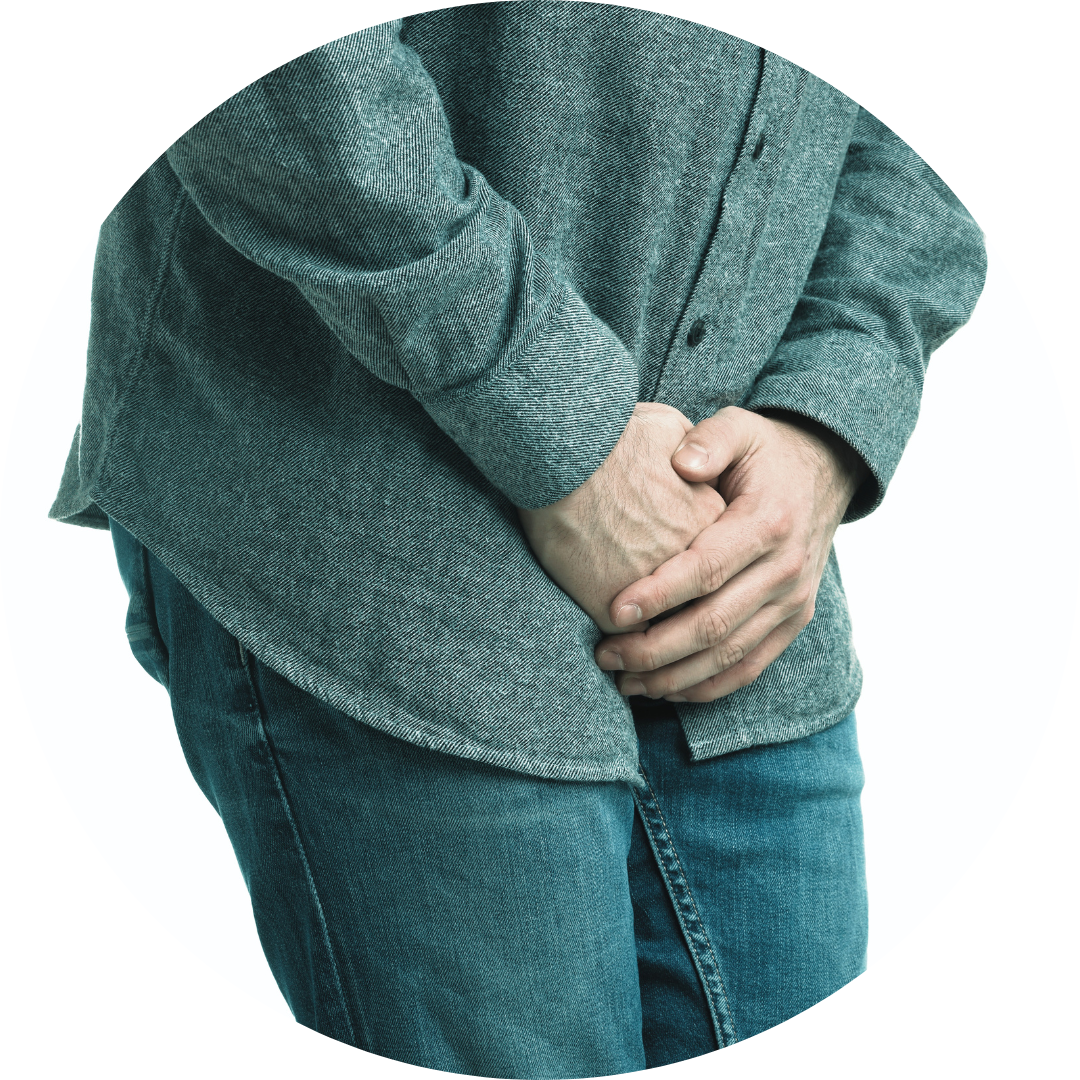
Some causes of testicular pain can create a visible or noticeable change. For example, an inguinal hernia may cause a bulge in the groin or scrotum.
However, when an infection, hernia, other structural issue or urgent condition has been ruled out, you may not see or feel anything unusual in the scrotum itself. The testicle can feel completely normal and still be sore or painful because the pain may be coming from somewhere else.
This is called referred pain. It means you feel the ache, soreness or pain in the testicle, but the source is another part of the body. Common sources include the pelvic floor, irritated nerves, and muscles in the lower back, hips or groin. These structures can become tight, strained or irritated and send pain into the right testicle, left testicle or both.
Is it prostatitis, or your pelvic floor?
Many men get told they have “prostatitis,” take a round of antibiotics, and feel no better.
When testing doesn’t find bacteria and antibiotics haven’t helped, tight or overactive pelvic floor muscles may be a more likely source of their symptoms than bacterial prostatitis.
An estimated 90 to 95 percent of chronic prostatitis cases are non-bacterial. Many are classified as chronic prostatitis/chronic pelvic pain syndrome (CP/CPPS), where tight or overactive pelvic floor muscles create pain and urinary symptoms that copy a prostate infection.
Pelvic floor dysfunction can cause testicular, groin or pelvic pain, along with urinary urgency, frequency, difficulty starting the flow of urine or pain after ejaculation. These symptoms can feel similar to prostatitis.
A proper assessment is important because the treatment depends on the cause. Antibiotics may be appropriate for a confirmed bacterial infection. When pelvic floor tension is contributing to the symptoms, pelvic health physiotherapy may help.
This is one of the most overlooked patterns I see in men with ongoing pelvic pain.
What this can look like
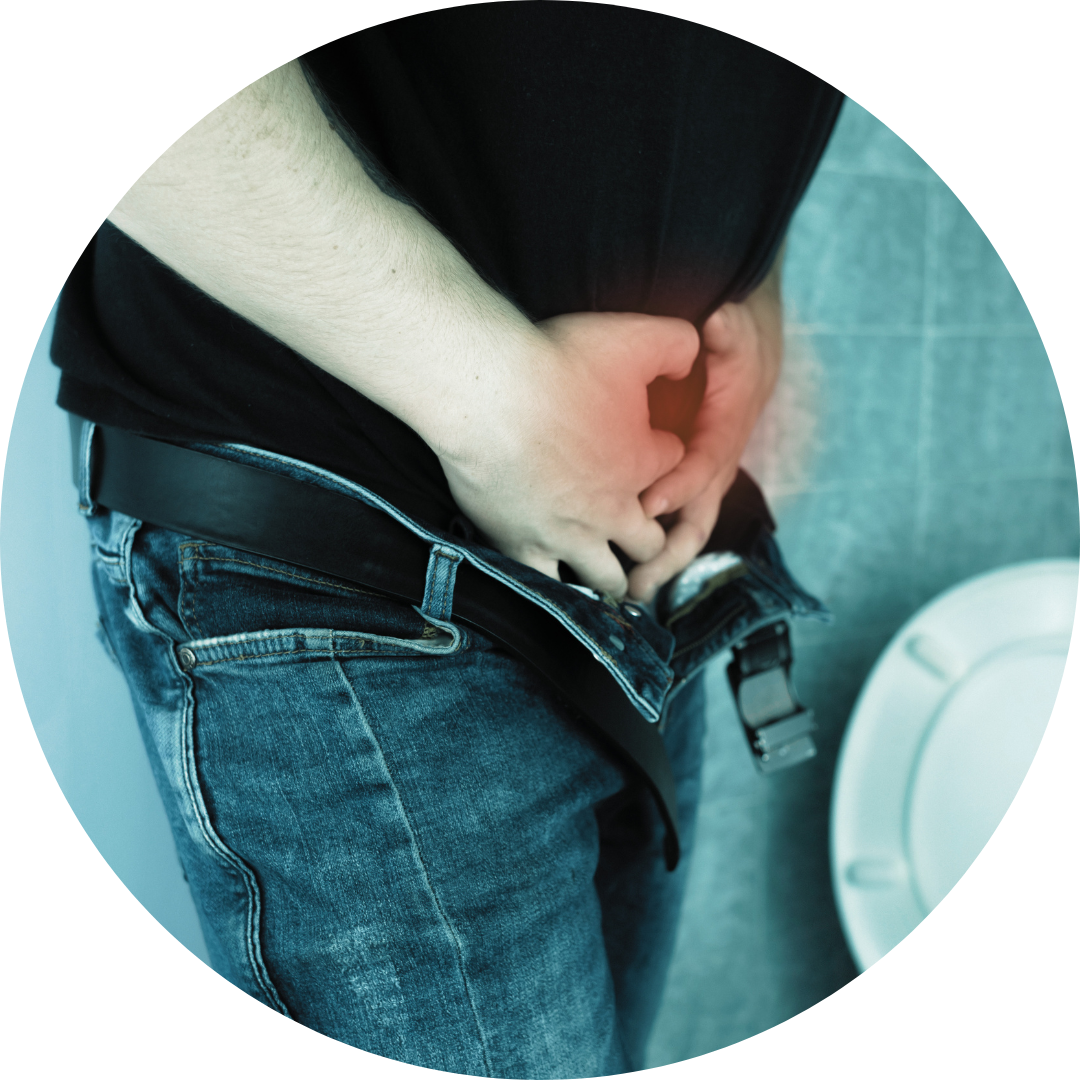
A common path starts with a weak urine stream or the feeling that you didn’t fully empty.
Because those symptoms sound like a bladder or prostate problem, most people think to see a urologist, and few think of physiotherapy or to ask about the pelvic floor. Then testicular or groin pain shows up. Infection tests come back negative, antibiotics don’t help, and fear of making it worse leads you to stop working out or doing the things you enjoy.
In one case a pelvic health clinic shared, a man went through close to a year of that, and nearly ten urologists, before anyone looked at his pelvic floor. An assessment found that his muscles were staying tight and weren’t relaxing when they should. Once he learned to relax them and built activity back up slowly, he got his life back.
Can a tight pelvic floor really cause testicle pain?
It can, in a couple of ways. The muscles can refer pain into the testicle, or they can irritate nearby nerves.
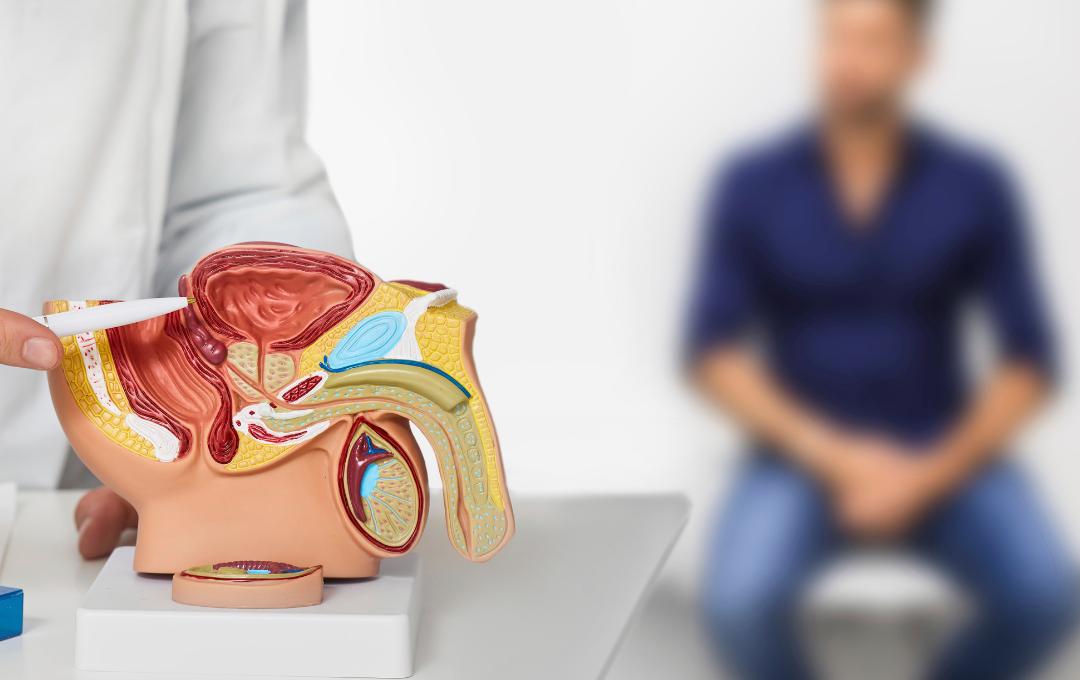
The pelvic floor is a group of muscles at the bottom of your pelvis that support your bladder and bowel. Like any muscle, they can get tight and sore, and you can feel that ache in your testicle even when the testicle itself is fine.
The pudendal and genitofemoral nerves run through or near the pelvis and groin. When they’re irritated, they can cause aching, burning, or sharp pain in the scrotum, groin, or the area between the scrotum and anus. Pudendal pain has a telltale sign: it’s often worse when you sit and eases when you stand.
There’s also the cremaster muscle, the small muscle that lifts and lowers the testicle. When it’s too tight or overactive, it’s an under-recognized source of testicle and groin pain.
Add tight or irritated muscles in the lower back, hips, and groin, and there are plenty of ways for muscle to be mistaken for a testicle problem. That’s why a good assessment looks at more than the spot that hurts.
How pelvic floor physiotherapy targets the actual source instead of the symptom.
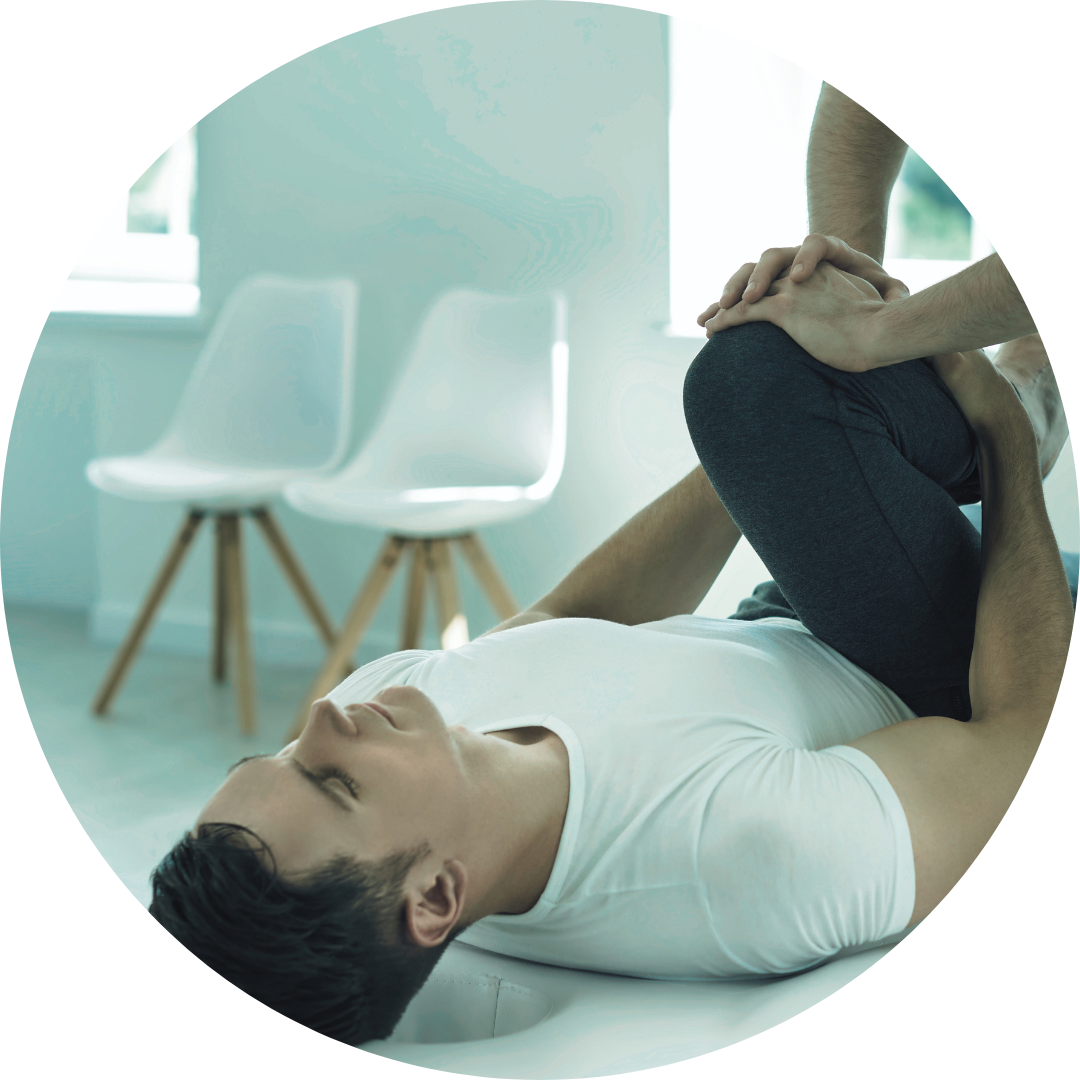
If an assessment shows that muscle tension or irritated nerves are contributing to your testicle pain, pelvic floor physiotherapy can address those areas instead of focusing only on where you feel the pain.
At our clinic, Tashelle Peigan has advanced training in pelvic health and works with men experiencing testicular and pelvic pain.
An assessment may look at your pelvic floor, hips, lower back, breathing, posture and daily movements.
Your treatment will depend on what the assessment finds. It may include manual therapy for tight muscles, exercises to improve nerve movement, changes to your posture or sitting position, and breathing techniques that help reduce tension throughout the area.
Can Kegels make testicle pain worse?
Yes. If your pain is tied to a tight pelvic floor, Kegels can make it worse. Squeezing muscles that are already tight is like clenching a hand that’s already cramped.
In that situation, the work often starts the other way around, learning to relax and lengthen first. Someone recovering from prostate surgery may need strengthening. Someone in pain with a tight floor usually needs release first. That’s why it’s better to have your pelvic floor assessed than to guess which exercises you need.
Surprising symptoms men don’t connect to pelvic health:
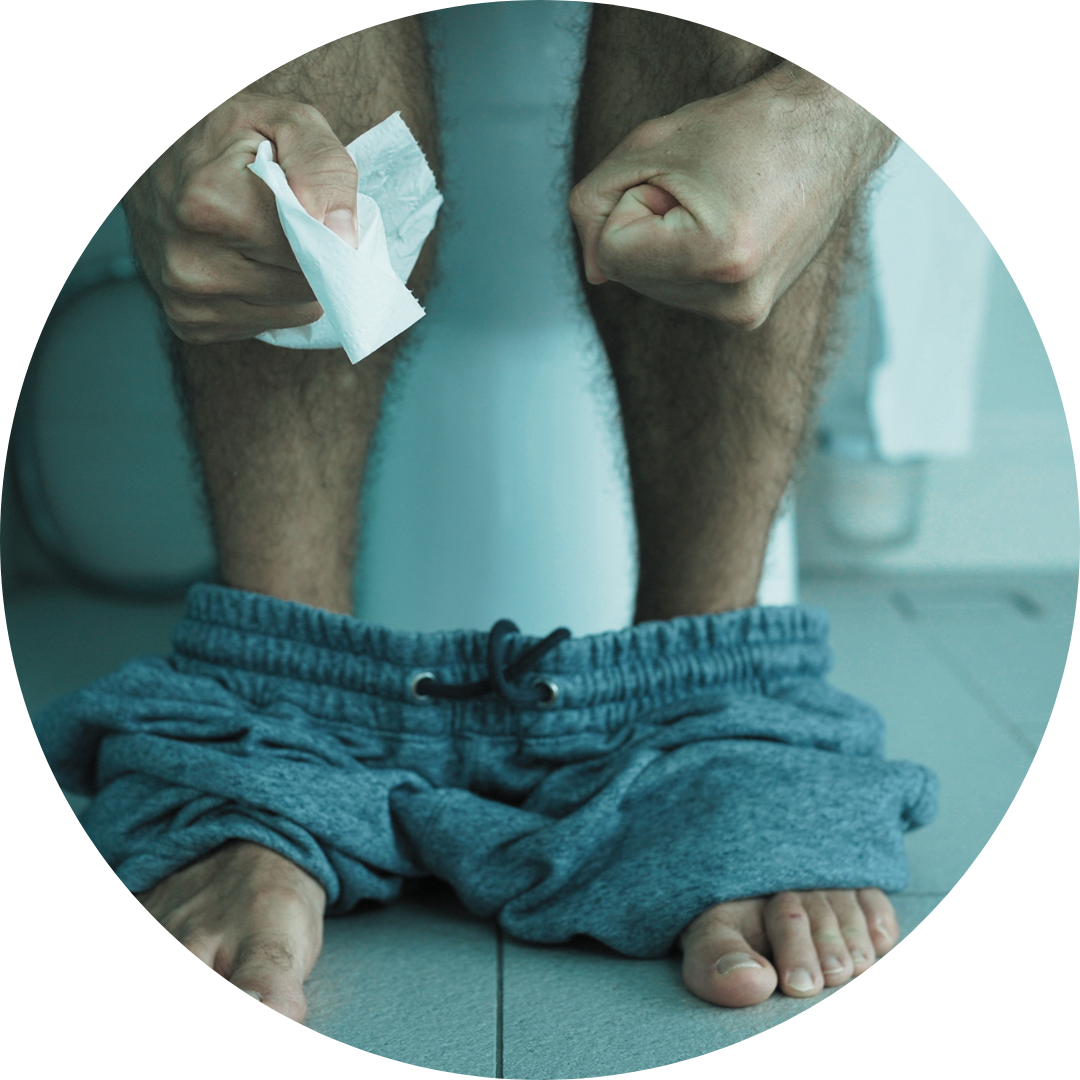
Because these muscles do so many jobs, pelvic floor tension can show up in places you might not think to link together:
Constipation or straining, which can also feed hemorrhoids that keep coming back
Dribbling after you think you’re finished at the urinal
Urinary urgency, or a weak, stop-start stream
Erectile or ejaculatory changes
You don’t need to have all of these. One or two that keep circling back is reason enough to get it looked at.
What you can try at home this week
None of this replaces a medical or pelvic floor assessment, and it’s the kind of thing to bring to your physician or physiotherapist. Once urgent and medical causes are ruled out, these can help you avoid piling on more tension:
Stop straining on the toilet. Feet on a small stool so your knees sit above your hips, and breathe the movement out instead of holding your breath and pushing.
Breathe during effort. When you lift, cough, or shovel, breathe out on the effort rather than holding your breath and bracing.
Break up sitting. If sitting makes it worse, stand and move every 30 to 45 minutes, and try a cushion that offloads the area.
Don’t force a stretch. During a flare, skip aggressive stretching or anything that clearly makes the pain worse. Warmth can help relax tight muscle.
Skip DIY Kegels while you’re in pain. First find out whether your pelvic floor is weak, tight, or having trouble coordinating.
Let’s help the men in your life with this conversation
Men wait longer than anyone to raise this, and the cost is months or years of pain that often has a solution. The more we normalize the conversation, the sooner men get help.
Here’s where to start:
Ensure urgent or unusual symptoms get checked. Don’t wait on sudden severe pain, and book an appointment for any lump or change in a testicle.
Don’t hold back. Tell your provider about the urinary, bowel, sexual, back, hip, and sitting symptoms too.
Ask about the pelvic floor once medical causes are cleared. If the pain lingers, a pelvic floor physiotherapy assessment can help find the muscles or nerves involved.
Frequently asked questions
Why do my testicles hurt when nothing looks wrong?
Once infection, injury, and urgent causes are ruled out, the pain is often referred from muscles or nerves in the pelvis, groin, hips, or lower back, so the testicle can look and feel normal even while it aches.
Can a tight pelvic floor cause testicular or groin pain?
Yes. Tight pelvic floor muscles can send pain into the testicle or irritate nearby nerves. Pain that’s worse when you sit is a common clue, though an assessment is needed to find the cause.
Is chronic prostatitis always an infection?
No. Research suggests roughly 90 to 95 percent of chronic prostatitis isn’t caused by bacteria. Many cases are chronic pelvic pain syndrome, which is often linked to pelvic floor tension.
Do Kegels help testicle pain?
It depends. Kegels can make things worse when the pelvic floor is already tight. An assessment shows whether you need strengthening, relaxation, or better coordination.
When should I see a doctor for testicular pain?
Go to an emergency department for sudden severe pain, especially with nausea, vomiting, or swelling. Get prompt care for fever, redness, warmth, or pain after an injury, and book an appointment for any lump or change in size or shape.
Feeling any of this? Let’s find your starting point.

Maybe it’s an ache that keeps coming back. Maybe your groin hurts when you sit. Maybe you’ve been working around leaking, dribbling, or a weak stream.
You don’t need to know whether it’s your prostate, your nerves, or your pelvic floor before you reach out. Sorting that out is our job.
Wondering where to start? Book a free discovery call.
holisticphysiowellness.ca · (306) 373-0060 · 302 4th Ave N, Saskatoon
A quick note on our scope
We’re Registered Physiotherapists, not medical doctors. We don’t diagnose or treat cancer, infections, or other medical conditions, and we don’t prescribe medication. This guide explains how muscles, nerves, and the pelvic floor can contribute once urgent and medical causes have been assessed. For a lump, sudden or severe pain, fever, or anything that feels medically urgent, please see a physician or head to the nearest emergency department first.
About the Author

Kim Deschamps is a Registered Physiotherapist and the founder of Holistic Physiotherapy & Wellness in Saskatoon, where the team takes a whole-person approach to care.
Pelvic health assessments and treatment for men are provided by Tashelle Peigan, who has advanced training in pelvic health.
References
Canadian Cancer Society, "Survival Statistics for Testicular Cancer."
Habermacher et al., "Prostatitis / Chronic Pelvic Pain Syndrome," PubMed.
National Institute of Diabetes and Digestive and Kidney Diseases, "Prostatitis."
American Urological Association, "2025 Male Chronic Pelvic Pain Guideline Recap."
Proactive Pelvic Health Centre, "What Is Pudendal Neuralgia?"
Proactive Pelvic Health Centre, "What Is Cremaster Muscle Dysfunction?"
CBC Arts, "Why Tom Green Says He’s ‘Glad’ He Got Testicular Cancer at 28."
Where Wellness Takes Root
Holistic Physiotherapy & Wellness · holisticphysiowellness.ca · (306) 373-0060 · 302 4th Ave N, Saskatoon