
From Food Fads to Food Goals: Generational Changes in Diet Culture and Eating Habits
March 2026
TL;DR: We’ve all eaten the way we were taught. What started as survival turned into restriction, trends, and tracking. Now, Gen Z is questioning the rules and focusing more on what helps them feel good day to day, rather than chasing another diet.
Inside this blog:
How diet culture and eating habits have shifted with each generation
Why scarcity shaped Baby Boomers’ relationship with food
How the low-fat movement influenced Gen X eating and exercise habits
What the avocado toast debate and low-carb trends reveal about Millennials
Why Gen Z is moving away from rigid diet rules
What functional eating and personalized nutrition look like today
How history, culture, and science continue to shape the way we eat
Every generation has been taught a different story about food. What we thought was healthy, what was considered dangerous, and even what kind of eater you were supposed to be have all changed over time.
Diet culture and eating habits by generation have evolved dramatically. I think we all just do the best we can with what we have at the time: the research, the resources, the influences in our lives, and what our own bodies are telling us.
I also think we learn from history.
At one point, eating was about survival. We ate whatever we could find. Then, we started restricting ourselves and cutting out carbs and fat. We were hopping on trends to lose weight, gain weight, or chase whatever body shape was considered ideal at the time.
Now, many in Gen Z are stepping away from traditional diet culture and toward functional eating, an approach that focuses on how food supports energy, digestion, mood, and daily life.
Is functional eating the result of decades of nutrition trends, trial and error, and lived experience? Are we finally starting to get it right?
Let’s take a walk down memory lane and explore the history of dieting, what each generation was actually eating, the diets they were trying, and what we’ve learned along the way.
Baby Boomers (1946–1964): Scarcity and Structured Eating.
“If You Take It, You Eat It”
Baby Boomers were raised by parents who lived through the Great Depression and World War II. Rationing, scarcity, and making do with what was available was how they lived. Many Baby Boomers grew up hearing, “clean your plate” and “there’s kids starving out there – be grateful for what you’ve got on your plate”.
Eating was structured, meals happened at set times, and finishing what was served was expected.
For many Baby Boomers, everyday meals included things like:
Meat and potatoes
Casseroles
White bread
Butter and whole milk
Heart disease was becoming more understood, and dietary fat and obesity were increasingly linked to cardiovascular risk. The early messages they received about eating less fat and taking in fewer calories may have been the beginning of the diet culture that future generations inherited.
Generation X (1965–1980): The Low-Fat/Fat-Free Movement
“I Can’t Believe It’s Not Butter”
By the time Gen X was growing up and entering adulthood, heart disease was still a major concern. Dietary fat and cholesterol were strongly linked to cardiovascular risk in public health messaging, and reducing fat felt like a clear, practical solution that anyone could follow.
Food companies responded quickly, creating endless low-fat and fat-free versions of familiar foods. Diet culture became easier to buy into, literally. It was on nearly every shelf at every grocery store. Those foods led to an increase in high-sugar, refined carbohydrate foods, and the popularity of processed, reduced-fat items like Lean Cuisine.
It became the Low-Fat/Fat-Free Movement. There was an explosion of diet marketing, aerobics and a calorie-burning focus.

For many Gen X households, this was the era of:
Margarine replacing butter
Skim or 1 percent milk instead of whole milk
Fat-free salad dressings
Fat-free cookies and snacks, like SnackWell’s
Diet soda
Spray oils instead of pouring oil
Popular Diets were:
Liquid Diets/SlimFast: The late 80s saw the rise of liquid meal replacements (e.g., SlimFast) with the promise of "a shake for breakfast, a shake for lunch, then a sensible dinner".
The Grapefruit Diet (Hollywood Diet): A resurgence of a 1930s fad, based on the false belief that an enzyme in grapefruit burns fat, often limiting intake to 800 calories daily.
The Cabbage Soup Diet: A 7-day, low-calorie, high-fiber, and often smelly, diet that involved eating almost nothing but cabbage soup.
Exercise was also framed through the same lens. Movement was often about burning calories rather than building strength or feeling good. "A moment on the lips, a lifetime on the hips" and “no pain, no gain” were popularized mantras at that time.

I bet many Gen X remember:
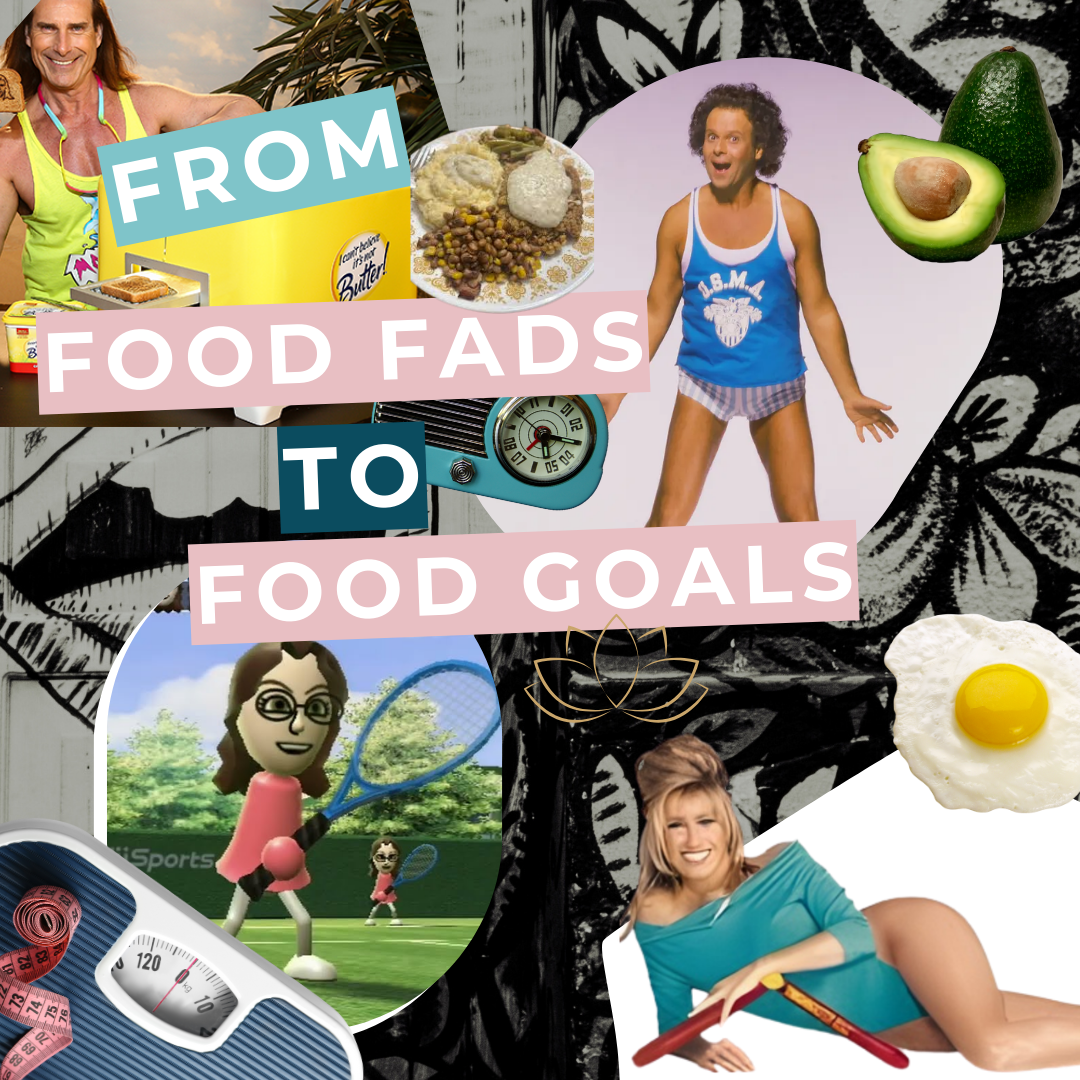
Aerobics classes with Richard Simmons or Jane Fonda.
ThighMaster with Suzanne Somers and “Buns of Steel” with Greg Smithey
Jazzercise (a combination of dance and exercise that was massive in the 1980s) and Step Aerobics where portable platforms were used for rhythmic stepping for cardio and leg toning.
Food and movement both seemed to become tools for control, but there were some positives:
People became more aware of nutrition labels
Heart health entered everyday conversation
The idea that food choices matter became widely accepted
Over time, cracks started to show. Removing fat often meant adding sugar and refined carbohydrates. Many low-fat foods were highly processed and less satisfying.
Despite all the fat-free options, rates of obesity and metabolic issues continued to rise. For many people, this led to cycles of dieting, frustration, and confusion.
Generation X did not just follow diet culture trends. They lived through its fast-growing expansion. The habits, fears, and food rules from this era shaped how Millennials and Gen Z would later approach eating.
Millennials (Born 1981–1996): The Rise of Low-Carb and Fat-Friendly Diets
The "Avocado Toast Debate”
Millennials are the generation that started questioning everything they had been told about food, especially the idea that fat was always bad.
They slowly brought fat back onto plates, and diets shifted from “low-fat” to “healthy fats”.
Common foods and habits many Millennials remember:
Avocados added to everything
Eggs making a comeback
Butter, coconut oil, and later ghee
Bacon being reframed as acceptable
Protein-focused meals
Fewer grains and less sugar
The right fats were good again, but carbs became the new concern. Some of the most influential diets during this time included:
Low-carb diets like Keto and Atkins, which emphasized high fat and very low carbohydrates
Elimination diets like the Paleo Diet (eliminated grains, dairy, legumes, and processed foods) and the Carnivore Diet (eliminated all plant foods)
Intermittent Fasting, which focused on when you eat rather than what you eat, using fasting windows to support weight and metabolic health
This was also the generation that learned to track everything. Calories, macros, steps, workouts, fasting windows, and progress photos all became part of their health plans. Apps and wearables made it easy to measure success, and harder to ignore food choices.
Popular Workouts & Gadgets
Tae Bo: A high-energy workout combining martial arts, dancing, and boxing.
Ab Rollers/Ab Roller Machines: Aimed at achieving "6-minute abs".
Bowflex Home Gym: Known for its polymer rod resistance system and persistent infomercials.
Yoga: Went mainstream in the early 2000s.
Wii Sports: Introduced motion-controlled gaming as a form of active, home cardio.

For some people, this structure felt empowering. For others, it increased pressure, stress, and a sense of always needing to “do better.”
The positives during this era:
Greater focus on food quality
Increased awareness of ingredients and processing
More conversations about blood sugar, metabolism, and inflammation
A shift away from highly processed low-fat foods
Millennials questioned diet culture more than any generation before them. But many still felt stuck inside it, just in a different form.
Generation Z (1997–2012): Moving Beyond Diet Culture
Artisan and Personalized Eating
Gen Z grew up watching the generations before them diet. They saw low-fat turn into high-fat. They watched carbs get cut, reintroduced, and cut again. They grew up with calorie tracking, transformation photos, and endless “what I eat in a day” content online. Many of them decided they did not want that.
At the same time, they were raised in a world built on personalization. Social media feeds, music, entertainment, and online experiences were curated specifically for them. Over time, this shaped their expectations, including how they think about food.
Many in Gen Z move away from rigid food rules and toward personalized nutrition and functional eating, focusing on how food supports daily energy, digestion, and mental clarity. They are not asking for more options. They want better ones.
What Functional Eating Looks Like Today for Gen Z
Gen Z is highly informed. Instead of asking, “What diet should I follow?” they tend to ask questions like:
What foods help me feel more energized?
What supports my digestion?
What helps my focus and mood?
What actually works with my lifestyle?
What Guides Gen Z’s Food Choices Today
Protein for energy and satiety, or the feeling of fullness between meals
Healthy fats rather than avoiding fat altogether
Fiber and gut health
Mental clarity and mood support
Flexibility that fits real life
Beyond nutrition itself, there is also more openness around how stress, sleep, mental health, and social media influence eating habits.
What’s Different This Time?
Unlike previous generations, weight loss is less often the primary goal. Gen Z eating habits are more holistic.
That doesn’t mean diet culture has disappeared. Trends still exist. Social media still influences food choices. But there is more skepticism around extreme restriction and more interest in what feels supportive rather than punishing.
What Comes Next for Diet Culture?
Gen Z didn’t invent functional eating. It’s been built on decades of nutrition science, trial and error, and lived experience across generations. But what feels different now is the intention.
Instead of asking food to control the body, there is a growing interest in using food to support it.
Whether this change will last or if it’s just another trend in nutrition, I guess we’ll have to wait and see. But it still shows a strong desire to move away from strict diet rules and toward healthier habits that are easier to maintain over time.
Ready to stop chasing diets and start feeling better?
Work one-on-one with our dietitian to build an eating approach that fits your body, lifestyle, and goals.
👉 Book your free discovery call with our dietitian now.
From all of us at,
Holistic Physiotherapy & Wellness
References:
Health Canada. (2025, March 13). Diets and food trends. Canada’s Food Guide. https://food-guide.canada.ca/en/tips-for-healthy-eating/diets-food-trends/
PwC Canada. (2025). Voice of the Consumer Report: Generation Z and food choices in Canada. Canadian Grocer.
https://canadiangrocer.com/generation-z-canada-driving-demand-healthier-food-choices
Everyday Health. (n.d.). The 10 most famous fad diets of all time.
https://www.everydayhealth.com/food/the-10-most-famous-fad-diets-of-all-time.aspx
International Food Information Council. (2023). Spotlight on Generation Z: Food and health survey.
https://ific.org/research/spotlight-generation-z/
QSR Magazine. (n.d.). Gen Z consumer behavior and personalization in restaurant experiences. QSR Magazine.
Body+Soul. (2026, January 25). Gen Z ditch diet culture for “functional eating” in new health trend. News.com.au.
https://www.news.com.au