
Do I Have Arthritis or Is It Just Aging?
Learn the early signs and how chronic pain affects your body, your mind, and your life.
Written and clinically reviewed by Kim Deschamps, MPT, BKin, PYT, BDN, Founder of Holistic Physiotherapy & Wellness | Last updated: September 2026 | Reading time: about 11 minutes
TL;DR
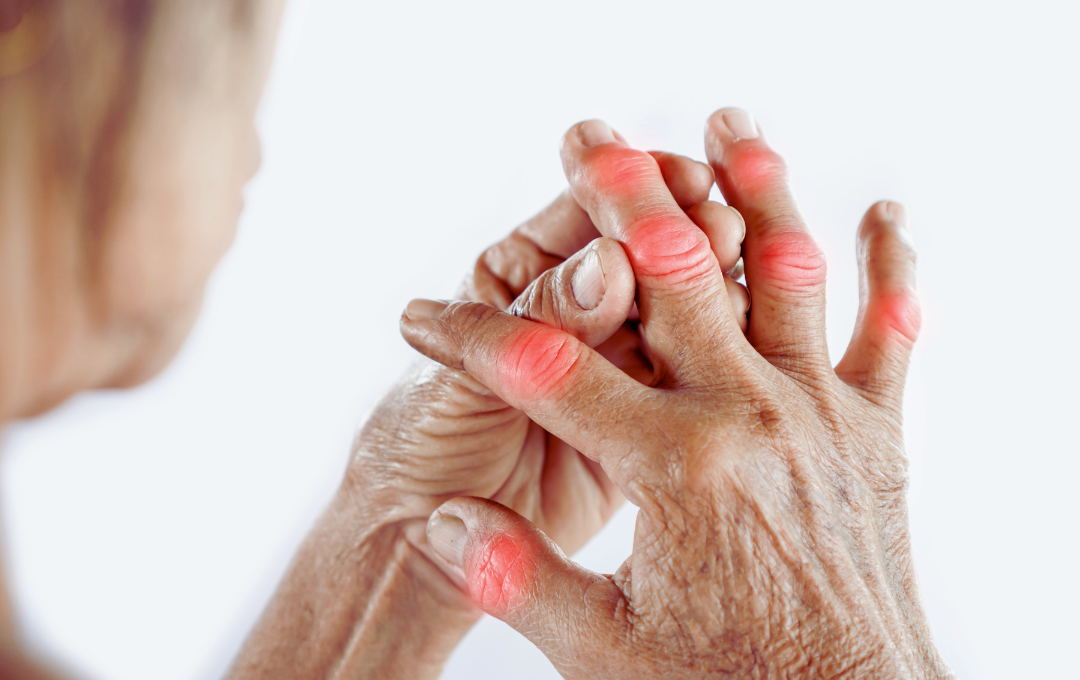
More than half of Canadians living with arthritis are under 65. Age isn’t the only factor. Previous injuries, genetics, occupation, body weight, activity level, and inflammatory conditions can all increase your risk.
And joint pain doesn’t only affect how you move. Over time, chronic pain can affect your sleep, your mood, your activity level, and how much of your life you plan around it.
The sooner you understand what’s causing your joint pain, the more options you have to manage it, stay active and independent, and keep doing the things you enjoy.
In this article, you’ll learn:
how to tell if joint pain could be arthritis
the early signs you shouldn't ignore
how old injuries can affect your risk
why chronic pain can affect your mood and daily life
what you can do about it
Before You Blame Your Age, Read This
Imagine training for years to compete at the Olympics. Every day revolves around movement, strength, flexibility, and performance.
Now imagine being told you have osteoarthritis at just 22 years old.
That’s what happened to Olympic gymnast Bart Conner.

Source: United States Olympic & Paralympic Museum
Most people don’t expect to hear the words Olympian and arthritis in the same sentence. They also don’t expect to hear 22 years old and arthritis together.
It might surprise you to learn that arthritis is not an “older person’s disease.”
“I’m too young for arthritis … aren’t I?”
If that thought has run through your mind, one piece of advice I hope you’ll take from this article is this: don’t wait. Don’t spend months, or even years, living with joint pain before having it assessed.
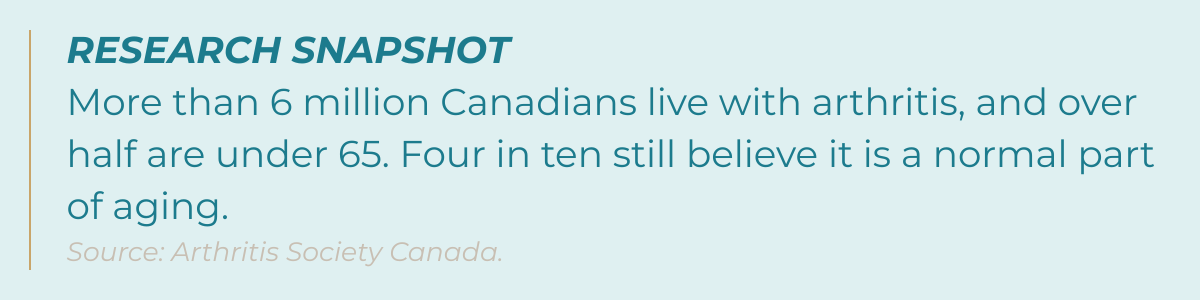
Arthritis is not one disease, and it isn’t caused by age alone. More than six million Canadians are living with arthritis, and more than half are younger than 65. Despite that, 40 percent of Canadians still believe arthritis is a normal part of aging.
Age is not the only reason for joint pain. The sooner you understand what’s causing it, the more options you’ll have to manage your symptoms, stay active and independent, and avoid changing your life around your joint pain.
You can’t change your age. You can change what you do next.
How Do You Know If It’s Arthritis?
Is this actually arthritis, or something else?
The only way to know for sure is to have it assessed by a healthcare professional, because several other things can feel the same. Arthritis often starts small, with changes that are easy to explain away.
Common early signs of osteoarthritis include:
joint pain that comes and goes with activity and becomes more constant over time,
swelling,
reduced range of motion,
and stiffness after rest.
Next time you wake up feeling stiff, check the clock.
Morning stiffness that eases up within 30 minutes of moving is more common with osteoarthritis. If you're still feeling stiff 30 to 60 minutes later, it may indicate an inflammatory form of arthritis, such as rheumatoid arthritis. Knowing how long it lasts can be helpful when you talk to your healthcare provider or physiotherapist about your symptoms.
What feels like arthritis can also turn out to be:
tendinitis,
bursitis,
an old injury,
overuse, or
muscle weakness around the joint.
Pay attention to whether your symptoms are becoming a pattern. Joint pain or stiffness that keeps coming back, isn't improving, or is starting to change how you move is when you should get checked.
The Arthritis Most People Never See Coming
Can active, hard-working people get it too?
Absolutely. Former athletes, nurses, construction workers, farmers, and even people who sit at a keyboard all day can find themselves dealing with joint pain years later.
Previous joint injuries are an important risk factor for osteoarthritis too. Dr. Julia Alleyne, a Toronto sport and exercise medicine physician and former Chief Medical Officer for Team Canada, notes that people who injure their ACL, with or without surgery, have a higher incidence of osteoarthritis later in life.
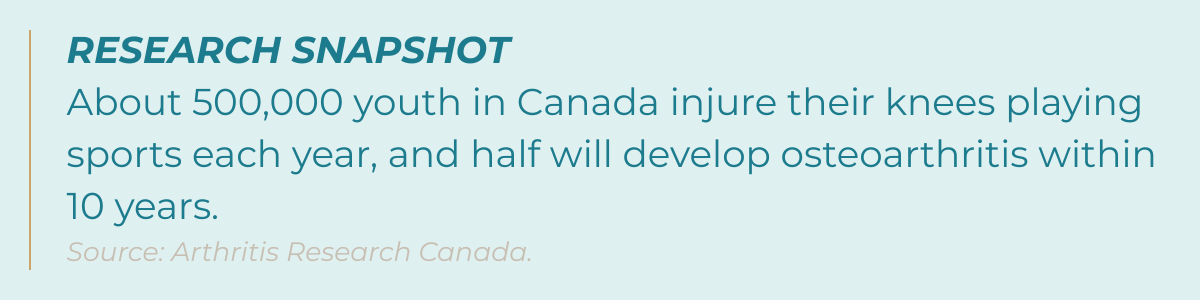
Madi, a young Canadian athlete featured by Arthritis Research Canada, was playing rugby for the University of British Columbia when someone tackled her from the side, dislocating her knee cap. She was in her early twenties and worried the pain would never go away.
After surgery, she couldn't keep her knee bent for long. Things most of us don't think twice about, like working out, walking upstairs, getting into a car, or sitting on an airplane, became extremely challenging.
But in Canada, the focus after a knee injury tends to be on getting you back to your sport or regular activities. Once you're discharged from care, you may not have a plan for taking care of your knee long-term or lowering your risk of osteoarthritis.
Madi took matters into her own hands. She got herself into a physiotherapy-led program to rebuild her knee health. Today, she has no pain in her knee, she's back to playing rugby, and she has a clear plan for lowering her risk of osteoarthritis.
Why Chronic Pain Wears You Down, Not Just Physically
Why does this affect my mood, not just my body?
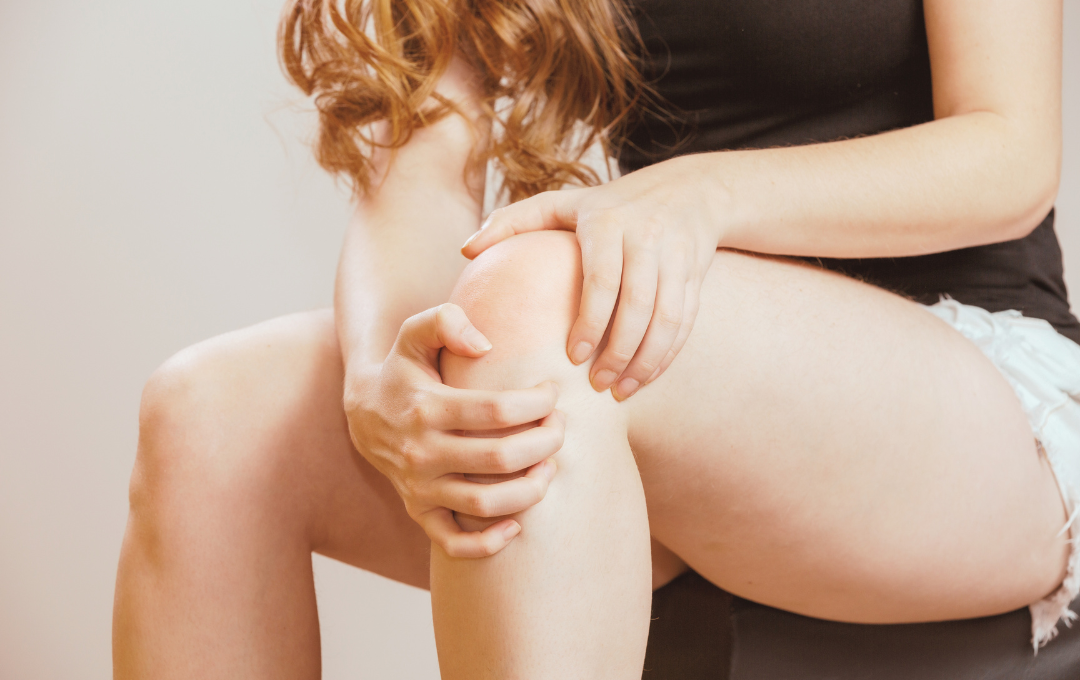
Chronic pain can affect much more than your joints. It can change what you do and, over time, how you feel. When you’re in pain, exercise gets less frequent, travel gets harder, you start turning down invitations, or have less energy for the things you enjoy.
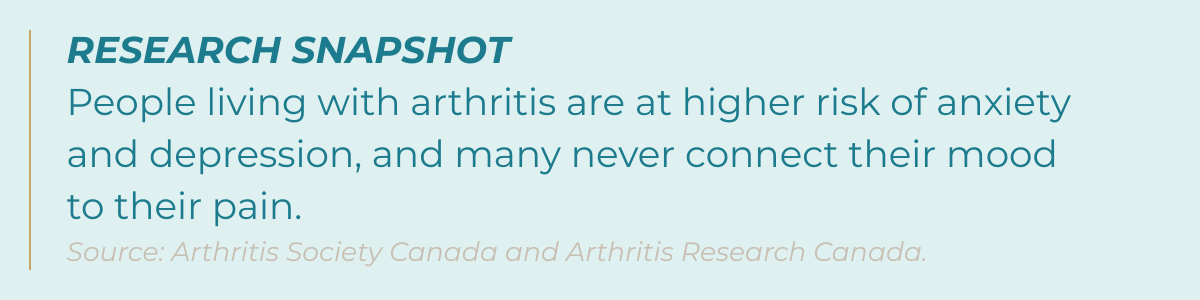
Those changes can affect your mood. Arthritis Society Canada reports that as arthritis pain rises, so do stress, anxiety, and depression, and that many people never connect the two. The relationship runs both ways: ongoing pain can pull your mood down, and low mood can raise how intensely you feel pain. Arthritis Research Canada describes it as a real sense of loss, of what you could do before, of routines, of parts of work or social life.
In the clinic, I often notice the mental side before anyone talks about it. You may feel more frustrated, have less patience, or simply not feel like yourself. These are common experiences when you’ve been dealing with pain for a long time, and getting the right support can help.
How Do You Cope Mentally With Chronic Pain?
What actually helps the mental side?
A few things genuinely help, and most of them work best together. In chronic pain, the physical and the mental are linked, so we plan for both. Clinical counselling gives you practical strategies for managing worry, frustration, and the emotional toll of living with ongoing pain. Lifestyle Medicine supports the sleep, stress, physical activity, and other daily habits that can affect how your pain feels.
Two protective factors show up again and again in the Canadian research: sleep and connection. Better sleep is linked to less pain and better coping, and people who feel supported by others tend to manage pain better than those going it alone. Gentle, regular movement lifts mood as well as function. The goal isn't to pretend the pain isn't there. It's to reduce how much it limits your day, your relationships, and the things you enjoy doing.
If low mood feels heavy or constant, please reach out, whether to your doctor, a counsellor, or a crisis line. Support is available, and asking for it early can make a real difference for you.
When Should You See a Physiotherapist?
What should I do next?
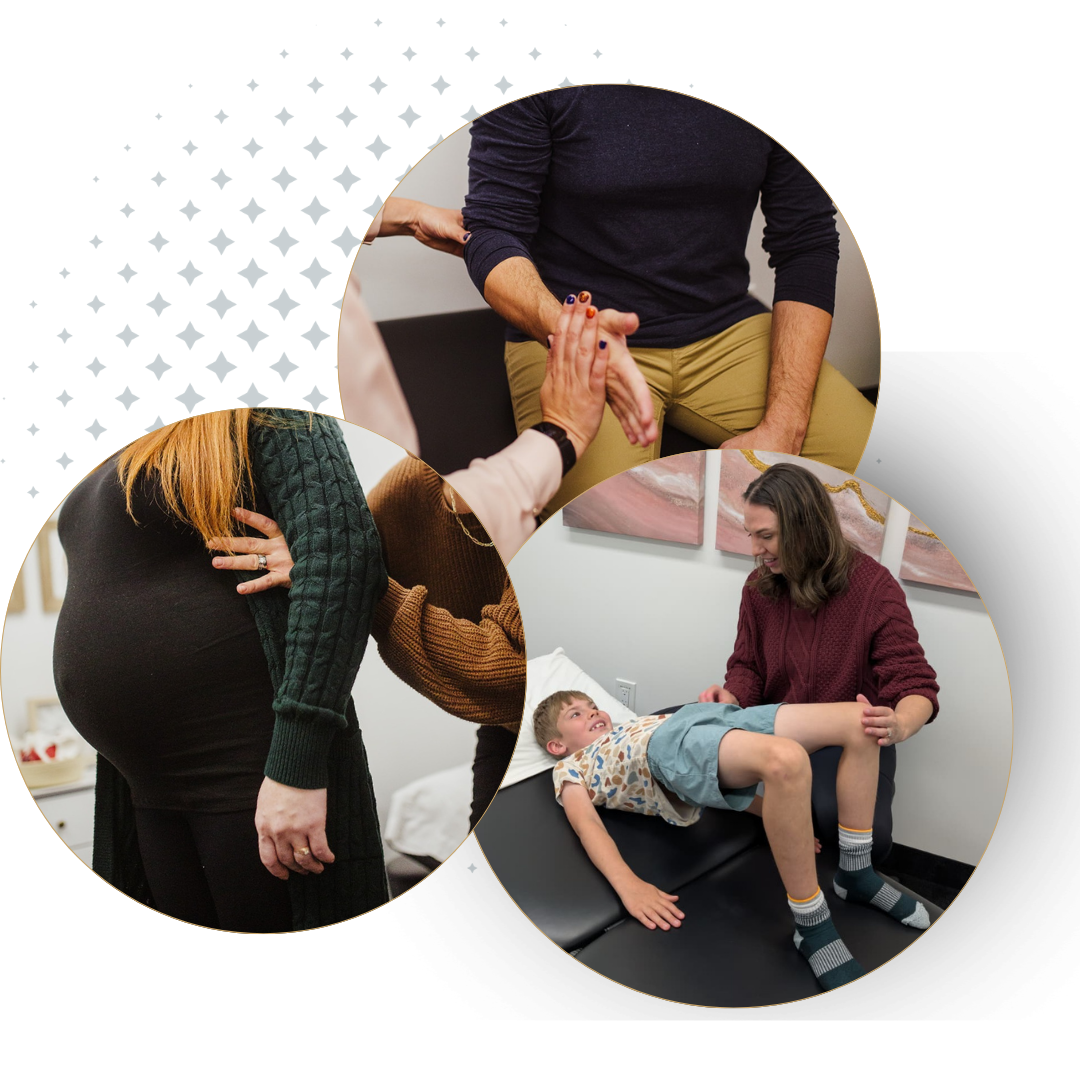
If joint pain has lasted more than six weeks, keeps coming back, or comes with swelling or a joint that feels unstable, it’s time to get it assessed. You don’t need to wait until it’s unbearable, and you don’t need a doctor’s referral to start.
A physiotherapist can assess how your joint moves, talk through your symptoms and injury history, and look for the physical signs of mechanical conditions such as osteoarthritis.
From there, we can build a treatment plan based on what we find.
If your symptoms point to an inflammatory type of arthritis, such as rheumatoid arthritis, we can recognize those patterns and refer you to a physician for the bloodwork, imaging, or other testing needed for a diagnosis.
And if your joint pain is related to a workplace injury or vehicle collision, our Saskatoon team is a registered provider with WCB and SGI. We also offer virtual physiotherapy appointments across Saskatchewan.
Try this: If your joint pain has lasted more than six weeks or keeps coming back, book a free discovery call. We can help you figure out the right next step instead of continuing to wait and hope it goes away.
What Happens at Your First Appointment?
What am I actually signing up for?
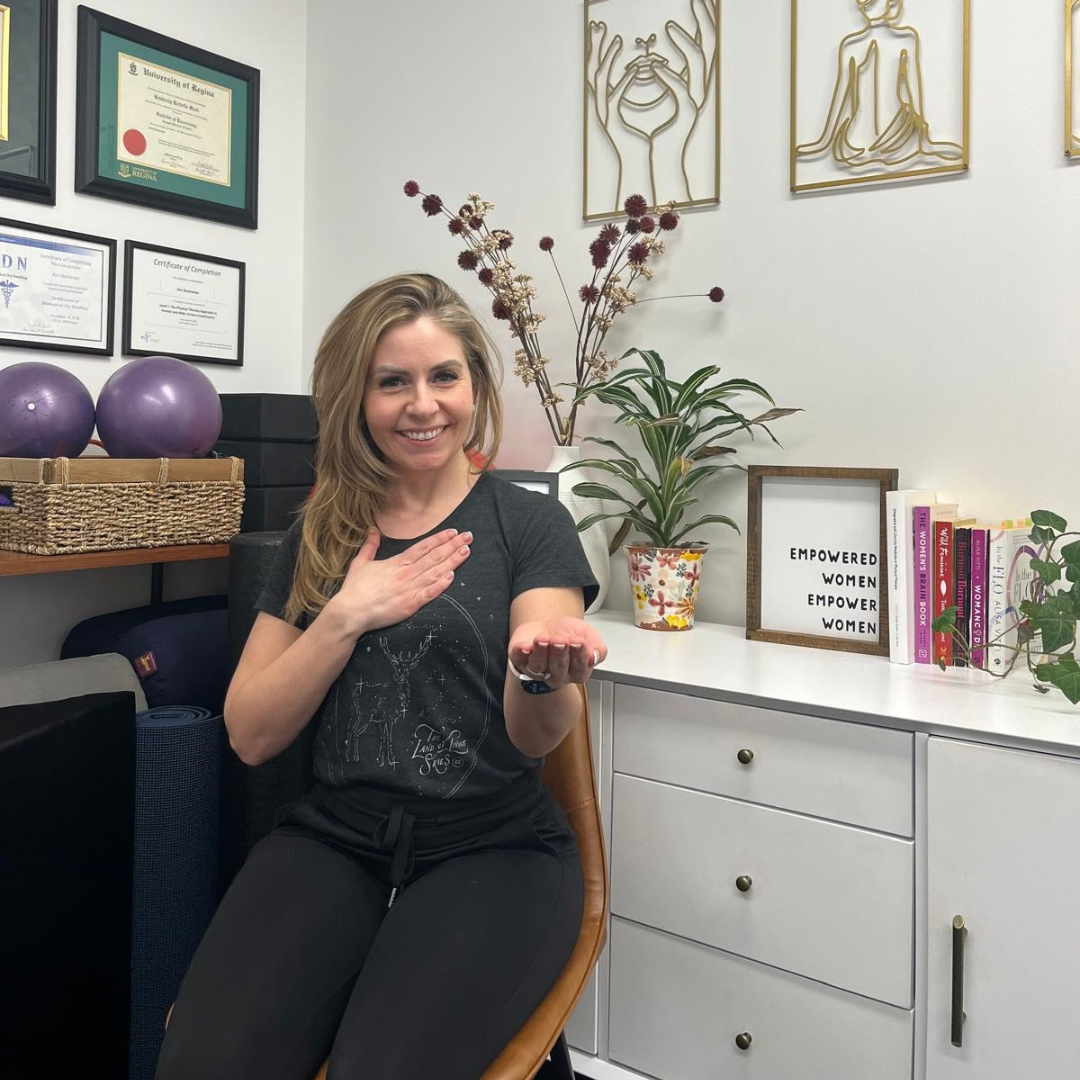
Your first visit starts with a conversation. We’ll talk about your history, your goals, and what your day-to-day life looks like, from work and commuting to exercise, parenting, and the activities you enjoy. Then we’ll look at how your joint moves, the muscles around it, your movement patterns, and other factors such as sleep, stress, and activity that may be contributing to root cause of how you feel.
In my experience, the biggest relief people feel at a first visit is finally being listened to. If booking a full assessment feels like a big first step, a free discovery call is an easy way to ask questions and find the right place to start.
Your Everyday Joint and Mood Care Checklist
What can I do at home?
You don’t need to do everything here. Choose one or two things that feel realistic right now and build from there.
Move
Aim for low-impact activity most days, like walking, cycling, swimming, or water exercise.
Add gentle strength work for the muscles around sore joints.
Break up long stretches at a desk with a short walk or stretch.
Protect your joints
Alternate higher-impact activities with lower-impact ones.
Change positions often rather than holding one for long stretches.
Warm up before activity, and ease off if a joint starts to flare up.
Support your mind
Protect your sleep, since rest affects both pain and mood.
Stay connected to people rather than pulling away.
Ask whether counselling or lifestyle medicine could support your plan.
Nourish your body
Eat regular, balanced meals rather than aiming for a perfect diet.
Include a variety of fruits and vegetables, whole grains, and protein-rich foods.
Choose foods that support your health and that you actually enjoy eating.
When to get help
Book an assessment for joint pain lasting more than six weeks.
Get checked for swelling, or a joint that feels unstable.
Reach out to your doctor or a counsellor if low mood feels heavy or constant.
If pain, fatigue, another health condition, or changing nutritional needs are making eating well harder, a Registered Dietitian can help you build a plan that works for your life.
Work with our team
Holistic Physiotherapy & Wellness
302 4th Avenue North, Saskatoon, SK S7K 2L7
(306) 373-0060 · admin@holisticphysiowellness.ca
holisticphysiowellness.ca
New this fall? Book a free discovery call, and our team will help you find the right fit.
Frequently Asked Questions
How does chronic pain affect mental health?
Chronic pain can affect your mood, sleep, energy, relationships, and how much you participate in the activities you enjoy. Arthritis Society Canada reports that people living with arthritis are at higher risk of anxiety and depression, and many people don’t realize their mood and pain may be connected.
Can chronic pain cause depression?
It can contribute, and the link runs both ways. Pain can pull mood down, and low mood can make pain feel more intense. Support that addresses both, like counselling alongside physiotherapy and lifestyle medicine, tends to work better than treating either on its own.
How do you mentally deal with chronic pain?
Start by naming the pain-and-mood loop rather than facing it alone. Practical strategies from clinical counselling, gentle regular movement, steady sleep, pacing, and staying connected to people all help. If low mood feels heavy or constant, reach out to your doctor, a counsellor, or a crisis line.
Can arthritis start in your 20s?
Yes. Osteoarthritis can begin after a joint injury, and nearly a third of cases start before 40. Rheumatoid and juvenile forms can appear even earlier. Olympic gymnast Bart Conner was diagnosed at 22, which shows age is only part of the story.
Does arthritis come and go?
Early on, it often does. Symptoms tend to flare with activity and settle with rest, which is exactly why people explain them away. Over time they usually become more frequent, so a pattern that keeps returning is worth having assessed.
What’s the difference between osteoarthritis and rheumatoid arthritis?
Osteoarthritis is a degenerative condition where cartilage gradually breaks down, often from age, load, or a past injury, and its morning stiffness is usually brief. Rheumatoid arthritis is an autoimmune and inflammatory condition that affects the joint lining, can start earlier in life, and tends to cause longer morning stiffness. One is mechanical, the other immune-driven, and each needs a different kind of care.
Can physiotherapy help arthritis and chronic pain?
Yes. A physiotherapist can assess and clinically identify mechanical arthritis like osteoarthritis, then help with a movement and strength plan, manual therapy, joint protection, pacing, and education. For inflammatory types, we work alongside your physician, and for the mental load, alongside counselling.
Is exercise good for arthritis?
For most people, yes, and it’s one of the most effective ways to reduce pain and protect joint function. Low-impact options like swimming, water exercise, cycling, walking, and gentle yoga tend to be easiest on weight-bearing joints. The key is matching the type and amount to your body.
How can I check myself for arthritis?
You can’t self-diagnose reliably, though you can track patterns before an appointment: which joints hurt, how long morning stiffness lasts, and whether swelling appears after activity. Arthritis Society Canada offers a symptom checker to help you prepare for that conversation.
About the author
Kim Deschamps, MPT, BKin, PYT, BDN
Kim is a licensed physiotherapist and the founder of Holistic Physiotherapy and Wellness, a multidisciplinary clinic in downtown Saskatoon. She has spent years helping people across Saskatoon manage pain, improve mobility, and build healthier daily habits, with advanced training in pelvic health physiotherapy, lifestyle medicine, dry needling, and professional yoga therapy. She has a strong interest in helping people get to the root of their symptoms through whole-person care. Under Kim’s leadership, the clinic received the Consumer Choice Award for Physiotherapy in Saskatoon and Area, for the third year in a row.
Kim’s own physiotherapy practice is currently full. The same collaborative, evidence-informed approach is shared across the Holistic Physiotherapy and Wellness team of physiotherapists, massage therapists, registered dietitians, a clinical counsellor, and other wellness practitioners, who are welcoming new patients this fall. Services are provided by regulated professionals within their own scope of practice.
Sources and Further Reading
• Arthritis Society Canada: Arthritis Awareness Month. How common arthritis is in Canada, who it affects, and the myth that it is just aging.
• Arthritis Society Canada: What is Arthritis. The early-symptom list, and that osteoarthritis morning stiffness usually lasts less than 30 minutes.
• Arthritis Society Canada: Managing Morning Stiffness. Why osteoarthritis stiffness is brief while inflammatory types last longer.
• Arthritis Society Canada: Mental Health and Arthritis. As arthritis pain rises, so do stress, anxiety, and depression, and many people never connect the two.
• Arthritis Society Canada: Pain Management, Mental Wellness. The two-way link between pain and mood, plus the roles of sleep and social support.
• Arthritis Research Canada: Arthritis and Mental Health. The bidirectional relationship, and the sense of loss that can come with chronic illness.
• Arthritis Research Canada: Stop Osteoarthritis. Canadian data on sport injuries and osteoarthritis risk.
• Arthritis Society Canada: Sports Injuries and Osteoarthritis. Dr. Julia Alleyne on ACL injuries and long-term joint health.
• Arthritis Research Canada: Preventing Osteoarthritis After Injury. Madi’s story and a physiotherapy-led knee health program.
• World Health Organization: Osteoarthritis. Typical age of onset and who osteoarthritis affects most.
• Health Canada: International Pain Awareness Month. Context on chronic pain in Canada.
• Saskatchewan Physiotherapy Association: Arthritis. Arthritis among the conditions physiotherapists routinely help manage.
• Mayo Clinic: Arthritis pain, Do’s and don’ts. Low-impact exercise, weight, and everyday management guidance.
• Arthritis Consumer Experts / JointHealth. Profiles of athletes living with arthritis, including Bart Conner.
This article is general wellness education and isn’t a substitute for individual medical advice. Services are provided by regulated professionals within their own scope of practice.