
The Back-to-School Sanity Guide: How Working Parents Can Avoid September Burnout
7 things that wear parents down when school starts and how to get ahead of them, especially if you’re also navigating perimenopause.
Written by Kim Deschamps, MPT, BKin, PYT, BDN, Physiotherapist and Founder of Holistic Physiotherapy and Wellness. Published August 2026.
TL;DR: Back to school changes a lot at once, but most of it is predictable, which means you can prepare for it. This guide covers the seven things that wear working parents down most in September, from the mental load and lost sleep to stress, constant task-switching, and perimenopause, plus simple ways to get ahead of each one. You’ll also find a Back-to-School Survival Checklist you can start today. Pick one or two changes that fit your life, and build from there.

As a mom of two school-aged kids, I know how stressful the back-to-school routine can be. We go immediately from quiet summer mornings to packing lunches, following a school calendar, signing forms, getting kids to activities, and trying to remember who needs to be where and when.
As a physiotherapist, I see the other side of this too. A few weeks after school starts, people come in tired, tense, and run down. The good news is that a lot of it is predictable, so you can get ahead of it. This guide walks through the seven things that tend to wear parents down most and some tips to help you manage it all without sacrificing your sanity or burning out.
Here are the seven things to watch for, and how to get ahead of each one.
1. The Mental Load Is Heavier Than It Looks
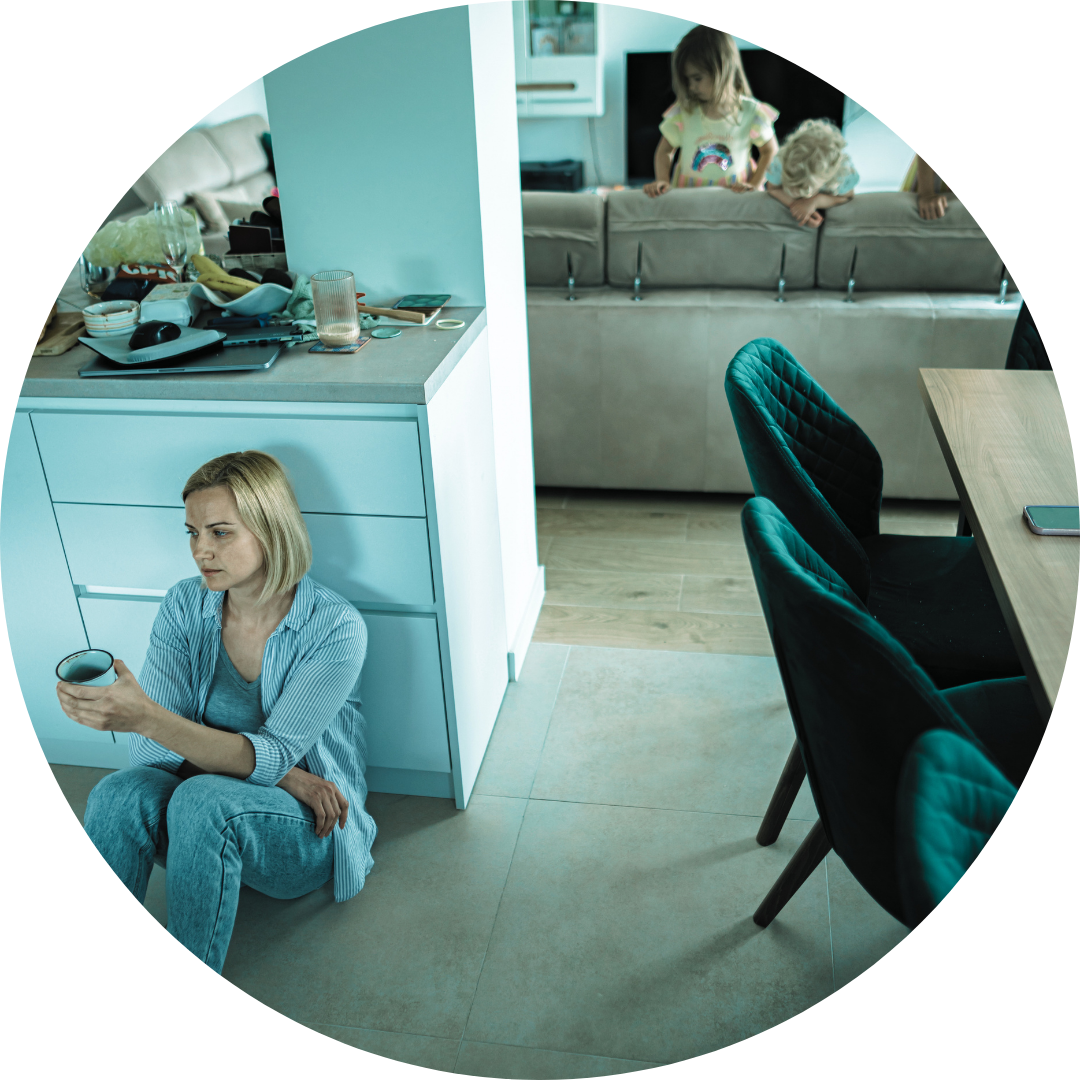
Why am I so tired when I’m “just” doing normal parent stuff?
It looks easier from the outside than it is on the inside. If you feel like you’re the only one completely wiped out after a totally "normal" day, or feel guilty for complaining about it, it’s because what you’re carrying is not just a busy schedule. It’s an invisible, non-stop mental checklist that physically drains your body.
Picture a typical Tuesday morning. It's 7:12 a.m. and you’re trying to make breakfast or get lunches made, you’ve just been informed about the day’s field-trip and need to sign the form, someone’s snooze alarm is going off for the third time, and someone can’t find their other shoe.
Meanwhile, a message pops up in the mom group chat, you see those overdue library books still sitting on the counter, and you hear an argument break out about who spent too long in the bathroom.
That may not look or sound like work, but it’s demanding and can take a toll over time.
When most people think about getting back into the school routine, they only picture the visible jobs: making lunches, driving kids to activities, helping with homework, and chaperoning field trips, attending school events, and volunteering when needed.
What they often don't think about is the invisible work happening in your head.
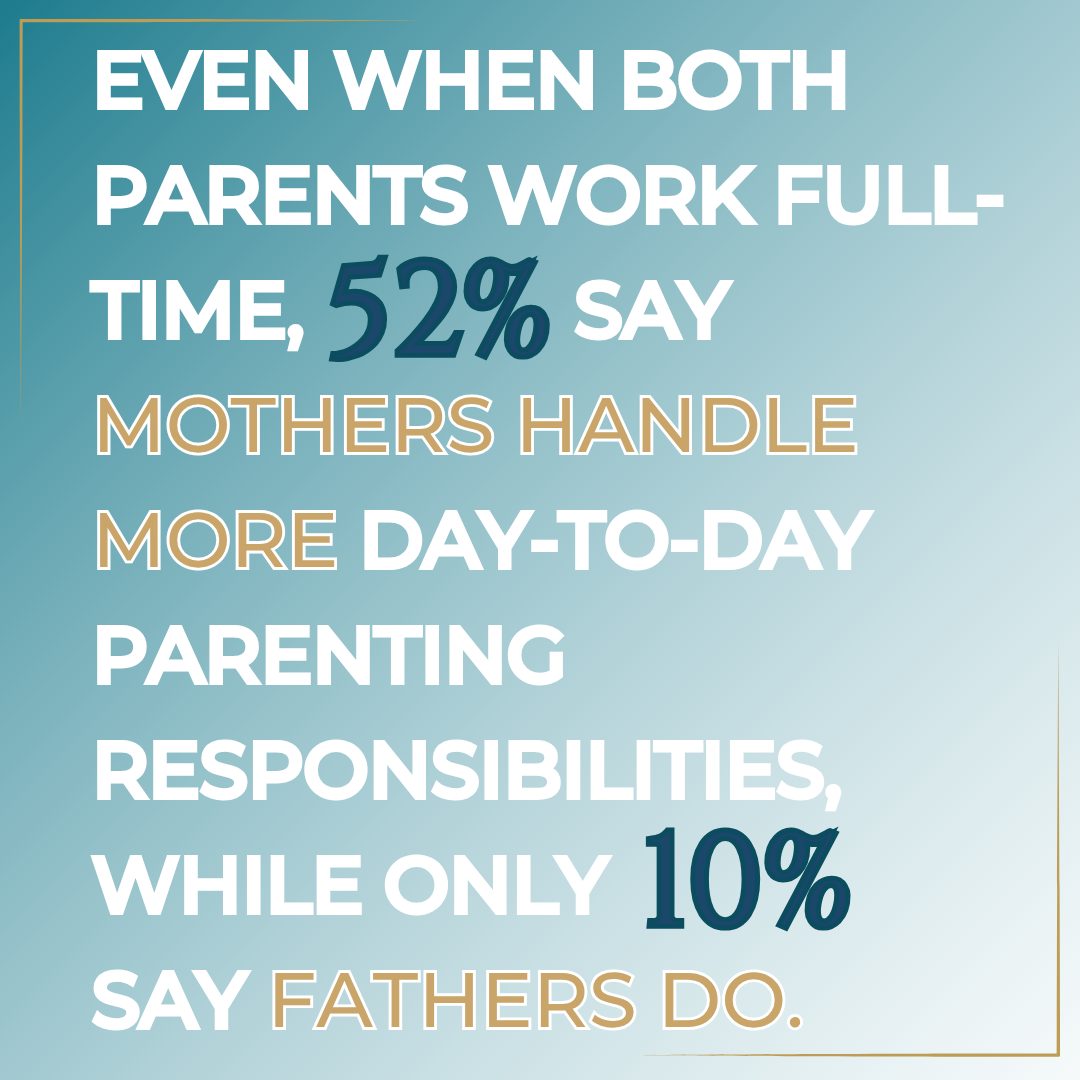
The mental load isn't just doing the tasks. It's carrying responsibility for the tasks before they even need to be done.
It's remembering picture day is next week and making sure their favourite outfit is clean. It's knowing one child has soccer, another has piano, and trying to figure out how everyone gets where they need to be. It's keeping track of school emails, permission slips, birthdays, appointments, fundraising deadlines, hot lunch days, and upcoming events.
It's noticing the milk is almost gone, realizing your child has outgrown their indoor shoes, wondering if that cough is getting worse, and planning tomorrow's supper while you're still cleaning up today's breakfast.
Your brain is constantly organizing, anticipating, prioritizing, and solving problems, often for multiple people at the same time.
By September, many parents aren't just adjusting to a new schedule. They're managing school routines, extracurricular activities, appointments, family responsibilities, and the emotional needs of everyone around them, often at the same time.
While every family divides responsibilities differently, carrying that much information, planning, and responsibility in your head can leave you feeling mentally drained and too tired for hobbies, exercise, and social activities. Over time, it can contribute to stress, fatigue, difficulty concentrating, irritability, overwhelm, and feeling like you’re always behind the ball or not doing enough.

2. You're Not Getting The Same Quality Of Sleep

Why is it more tempting to hit the snooze button in the mornings?
Sleep is usually one of the first things to change when school starts. Kids need to get up earlier, activities often run later, and many parents stay up after bedtime to pack lunches, finish work, fold laundry, or get a head start on the next day's to-do list.
Then, once you're finally in bed, your mind may still be running. You're thinking about tomorrow's schedule, what to make for supper, how you'll get everyone where they need to be, and everything else that's waiting for you in the morning.
The result is often less sleep, poorer quality sleep, or both. And that can have a big impact on how you feel the next day.
Parents already get less sleep than many other adults, so losing even 30 minutes a night can deprive you from what your body needs. (Statistics Canada)
A good night's rest affects your energy, focus, mood, patience, stress levels, pain levels, and ability to recover. The Public Health Agency of Canada found that adults who don't get enough sleep are significantly more likely to report ongoing stress than those who get an adequate amount.
Unfortunately, stress and poor rest often feed into one another. When one increases, the other often follows. Poor sleep can raise stress levels, and stress can make it harder to fall asleep and stay asleep. Over time, that cycle can leave you feeling exhausted, overwhelmed, and less able to cope with everyday challenges.
In the clinic, we often see people come in for headaches, fatigue, stress, or pain who are surprised to learn that sleep is such a big part of that picture.

3. Your Healthy Habits and Self-Care Gets Pushed Aside

Why do my healthy habits and self-care routines seem to fall apart?
The days are longer in summer and most of us have a little more time or flexibility. We get outside more, walk more, and eat supper together more often. Then September hits and you’re trying to fit 30 hours into a 24-hour day, so you grab whatever’s fast for supper, you skip the workout because there’s no time, and you tell yourself you’ll get back on track once things calm down.
The problem is that you can’t skip work, ignore the school pickup, or leave your kid at soccer practice because you're tired. But the walk, workout, meal prep, yoga class, counselling appointment, or time for yourself can always be pushed.
So they are.
But those healthy habits were helping you manage stress, sleep better, and maintain energy.
When you start sleeping less, moving less, and relying on fast, convenient foods more often, it's common to notice lower energy, more aches and pains, difficulty concentrating, increased irritability, and that feeling of running on empty.
Here is what I want you to hear, both as a physiotherapist and as a parent: September is not the season for building the perfect routine. So instead of overhauling everything, I encourage people to pick one or two small habits and let the rest go for now. That might look like:
Going to bed 30 minutes earlier.
Taking a 10-minute walk after supper.
Packing lunches the night before.
Keeping easy snacks in the car.
Booking your workout in your calendar like any other appointment.
Small changes don’t always feel as rewarding but they’re usually easier to sustain and can make a big difference over time.

4. Stress And The Mental Load Start Showing Up As Physical Symptoms

Why am I getting more headaches, neck & back pain, and jaw tension?
When we think about stress, we often think about it as an emotional or mental experience. But stress also changes how you move, breathe, sleep, and recover.
That's one reason our physiotherapists at Holistic Physiotherapy and Wellness in Saskatoon ask so many questions about your sleep, stress levels, workload, and activity levels when you come in with pain. Often, what's happening in your life is just as important as where it hurts.
When you're stressed, you may tense your shoulders, clench your jaw, breathe more shallowly, sit for longer periods, and move less throughout the day without even realizing it.
We’re not always so great at noticing it ourselves. Especially if we’re busy looking after everyone else. But if you start getting more headaches than usual, more neck or shoulder tension, frequent fatigue, dizziness, or aches that won’t go away, even though you haven't done anything physically demanding, it’s worth an appointment with your physiotherapist.
Please don’t just assume it’s normal aging, that you’ve slept wrong, or blame it on poor posture or a bad desk setup. While those things can play a role, stress and mental load are often big contributing factors we can help with. And the sooner the better.
One of the tricky things about stress is how it can loop. When we are stressed, our muscles tighten. When muscles stay tight, we get uncomfortable. When we are uncomfortable, we sleep worse. When we sleep worse, our stress tolerance drops. Then everything feels harder.

5. You’re Constantly Task-Switching And It’s Exhausting

Why is switching between tasks so draining?
One of the most tiring parts of parenting and caregiving isn’t only how much you do, it’s how often you switch between completely different roles. In the span of an hour, you might help a child find their homework, answer a work email, drive to an activity, plan supper, sit in on a meeting, book an appointment, and start the bedtime routine. Each one asks you to think differently and use a different set of skills. By the end of the day your brain feels worn out.
Researchers have found that every time you switch tasks, your brain needs extra energy to refocus, and those small costs add up over a day.
Most of us don’t call it context switching, but we know the feeling, because you’re halfway through one thing when someone needs another, you finally sit down and then remember the thing you forgot, and you solve one problem only to find there’s already another one to deal with. When parents tell me they’re exhausted, it’s rarely one hard thing, it’s the dozens of small things, all day long.
When we are mentally tapped out, we have less left for the things that actually help us feel good. We skip the walk, stay up too late, reach for easier food, and run low on patience. Then we blame ourselves for not keeping up, when often, we are simply asking too much of ourselves. Sometimes just talking to someone or naming what is draining you is the first real step toward changing it.

6. For Many Women, Perimenopause Adds Another Layer

Is it stress, or could it be perimenopause?
Not every parent reading this is in perimenopause. But for a lot of women in their 40s and 50s, it is one more factor that can make September feel harder than expected.
More than 10 million women in Canada are 40 or older, which is the prime window for perimenopause and menopause, according to the Menopause Foundation of Canada. In that organization’s research, about 95 percent of women experience symptoms, averaging around seven different ones each, and roughly one in two say they felt unprepared for this stage of life.
And what matters most here, is that many perimenopause symptoms look almost exactly like the effects of stress and poor sleep, including fatigue, brain fog, irritability, anxiety, trouble concentrating, disrupted sleep, and feeling less resilient than you used to, so when school starts and life speeds up, you tend to notice those symptoms more.
Many women tell us they suddenly feel like they are struggling with things that never used to faze them. They think they’re forgetting things and feeling more overwhelmed because their schedules are busier again. But at Holistic Physiotherapy and Wellness, we know there isn't always one simple answer. That's why we consider the whole picture, including your symptoms, stress, sleep, activity levels, lifestyle, and stage of life. Whether your symptoms are related to perimenopause, stress, persistent pain, or a combination of factors, our collaborative team can help you understand what's contributing and recommend the care that's most appropriate for you.

7. Life Doesn’t Slow Down on Its Own

Why is it so hard to find time to relax?
This is the one I relate to most as a parent. Every September, it is easy to think, things will settle down once we’re back in a routine. Then the goals posts move. Things will settle down after harvest. After Thanksgiving. And before you know it, it's December, you're exhausted, and Christmas is around the corner.
The truth is that life rarely slows down on its own. There is almost always another season, another commitment, or another activity waiting around the corner. If you don’t make the time, you’ll fall into a blank trap.
Every time you assure yourself that things will “slow down soon”, you put your own needs on hold.
You tell yourself you’ll start exercising again next month, you’ll catch up on sleep on the weekend, or finally book that physiotherapy appointment when it’s not so hectic.
The problem with "later" is that it has a way of turning days into weeks, and weeks often turn into months. Small problems become bigger ones, healthy habits become harder to restart, and feeling tired, stressed, or sore slowly becomes your new normal.
One thing I’ve learned, as both a physiotherapist and a parent, is that there will rarely ever be a perfect time to focus on yourself. What helps is finding routines that work in the middle of the busy, asking for help, and deciding what’s important enough to make room for. Say no to the extra commitment and say yes to yourself and your wellness.
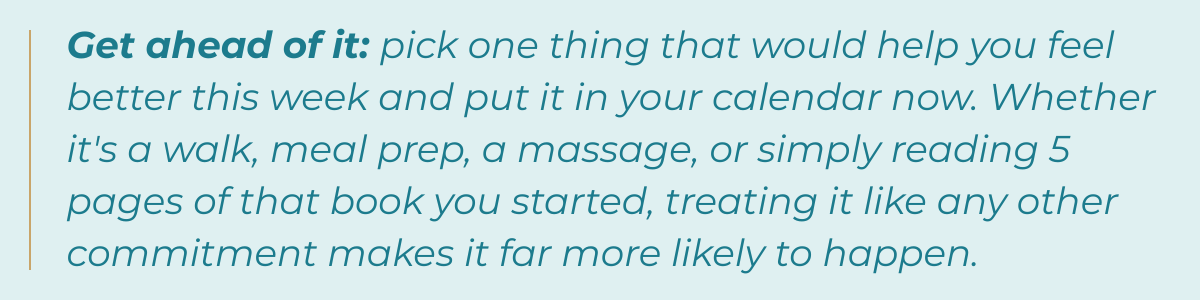
Your Back-to-School Survival Checklist
Preparing for back-to-school isn't just about getting your kids organized and checking off the school supplies list. It's also an opportunity to plan your own routine so you can protect your energy, reduce stress, and make the transition into September feel more manageable.
Remember, you don't need to do everything on this list. Choose one or two things that feel realistic for your life right now and build from there. The best habits are the ones that fit into your routine without adding more to your plate. Small, consistent changes are often the ones that last.
Work with our team
Holistic Physiotherapy and Wellness
302 4th Avenue North,
Saskatoon, SK S7K 2L7
(306) 373-0060
admin@holisticphysiowellness.ca
holisticphysiowellness.ca
New this fall? Book a free discovery call, and our team will help you find the right fit.
Frequently Asked Questions
How do I get ready for back to school without the September crash?
Start a week or two early and change one thing at a time, like easing bedtimes earlier, setting up a shared calendar, and prepping a few easy suppers. When the pieces are in place before the first day, the season feels less sudden, and you’re less likely to run yourself down by week three.
When should I start adjusting my kids’ and my own sleep schedule?
About two weeks before school starts, begin shifting wake-up and bedtimes by 10 to 15 minutes every few days. A gradual change is much easier on everyone than trying to reset the whole schedule the night before the first day.
How do I handle back to school stress at work?
The fall often means juggling work deadlines and a new school schedule at the same time, and that constant switching is draining. It helps to protect a few small anchors in your day, like a real lunch break, one short walk, and a hard stop in the evening when you can manage it, and to let go of the idea that you have to do everything perfectly in both places at once.
Could my fatigue and brain fog be perimenopause?
If you’re in your 40s or 50s, it can be a factor, because perimenopause symptoms like fatigue, brain fog, poor sleep, and trouble focusing look a lot like the effects of stress and short sleep. There’s often more than one cause, so it helps to look at the whole picture instead of assuming it’s “just hormones.” Holistic Physiotherapy and Wellness offers free discovery calls to help you navigate the best place to start.
When should I see someone about ongoing fatigue, headaches, or pain?
If symptoms keep going, get in the way of daily life, or don’t improve on their own, it’s worth checking in. These signs don’t always mean something serious, but often they mean you need more support than you’re getting.
About the author

Kim is a licensed physiotherapist and the founder of Holistic Physiotherapy and Wellness, a multidisciplinary clinic in downtown Saskatoon. She has spent years helping people across Saskatoon manage pain, improve mobility, and build healthier daily habits, with advanced training in pelvic health physiotherapy, lifestyle medicine, dry needling, and professional yoga therapy. She supports patients through menstrual health, fertility, pregnancy, postpartum, and perimenopause, and she has a strong interest in helping people get to the root of their symptoms through whole-person care. Under Kim’s leadership, the clinic received the Consumer Choice Award for Physiotherapy in Saskatoon and Area, for the third year in a row.
Kim’s own physiotherapy practice is currently full. The same collaborative, evidence-informed approach is shared across the Holistic Physiotherapy and Wellness team of physiotherapists, massage therapists, osteopath, dietitian, a clinical counsellor, and other wellness practitioners, who are welcoming new patients this fall. Each practitioner brings advanced training and experience, and services are provided by regulated professionals within their own scope of practice. Stay tuned on future women’s wellness programs that Kim is actively working on with the team to expand accessibility to whole-person and collaborative healthcare.
Sources and Further Reading
Pew Research Center: How Working Parents Divide Family Responsibilities (2026). The U.S. survey behind the finding that, in most homes where both parents work full-time, mothers carry more of the day-to-day parenting.
Statistics Canada: World Sleep Day. Plain-language Canadian data on how much sleep adults actually get, and why parents aged 35 to 49 get the least.
Public Health Agency of Canada: Are Canadian Adults Getting Enough Sleep?. A quick infographic connecting poor sleep to higher stress, with simple sleep targets for adults.
Menopause Foundation of Canada. Evidence-based information, symptom guides, and resources to help you understand and navigate perimenopause and menopause.
This article is general wellness education and isn’t a substitute for individual medical advice. Services are provided by regulated professionals within their own scope of practice.